

Cutting out is the part of dressmaking nobody warns you about. Not the fitting, not the invisible zip, not the hem you unpick twice. The cutting. I spent years on my knees on the spare-room floor with a pair of shears, standing up with a back that complained for the rest of the day and a bodice front that had crept a quarter inch somewhere under my hand.
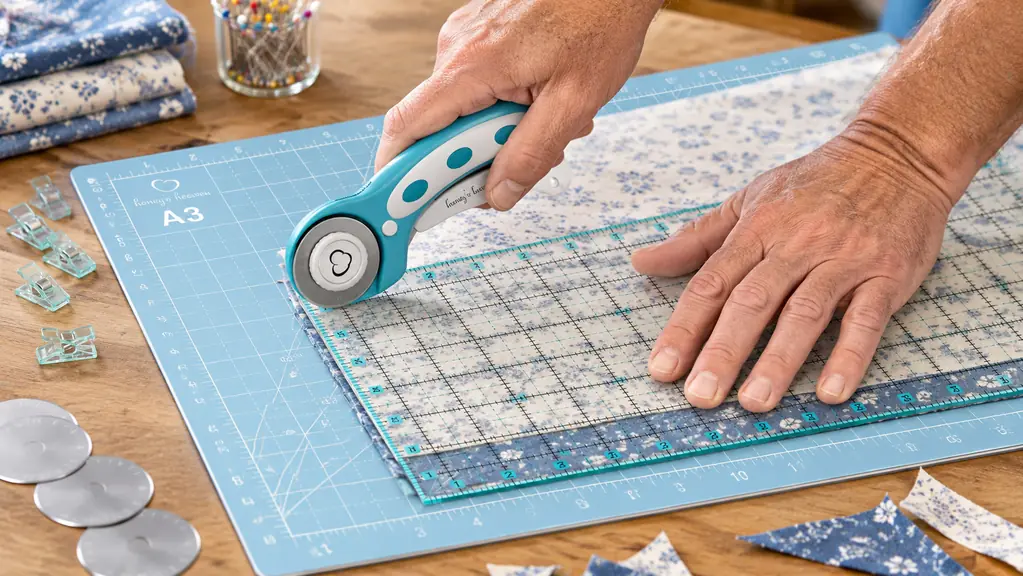
Then I tried a rotary cutter, and the Honey's Heaven rotary cutter set in particular, because it arrived as one box: the 45mm cutter, five spare blades, a cutting mat, an acrylic ruler and a few craft clips. I have cut for myself, my grown daughter and my teenage granddaughter off the same long table since, three very different shapes, and this is what actually changed.
The whole cutting table, in one box
The Honey's Heaven set gives you the 45mm rotary cutter, five replacement blades, an A3 self-healing cutting mat, an acrylic ruler and craft clips. It is the setup I would hand a friend who is still cutting on the floor.
Amazon See the rotary cutter set on Amazon →One roll replaces a hundred squeezes of the shears
A pair of shears only cuts while the blades are closing. Open, close, open, close, all the way down a long length of fabric, and that is before you have reached the second layer. A 45mm rotary blade cuts continuously for as long as you push it. My straight cuts now take seconds instead of a minute, and the line comes out straighter because nothing stutters along the way.
The fabric stays flat, so nothing shifts under your hand
Shears make you lift the cloth slightly as you cut, and lifting is exactly how a second layer creeps out of line. On a mat the fabric stays pressed down by your ruler hand, the blade rolls through it, and the top layer and the bottom layer finish in the same place. Most of my re-cuts came from that creep, never from bad measuring.
The ruler holds the line so you cut on grain
The acrylic ruler is the piece I did not expect to care about. You lay it on the mat, butt it against a printed line, and cut along its edge. The fabric does not get a vote. Grainlines stay straight, side seams actually meet, and a pattern piece with long straight edges comes out square instead of faintly lozenge shaped, which is a thing I used to accept as normal.
The grid means you measure once and cut many
The mat is A3, 18 by 12 inches, 3mm thick, with a printed grid of 16 by 10 inches. That grid is the quiet hero of the whole kit. I measure against it, cut, and the next piece starts from a line I can already see, without dragging out a tape and re-marking. The surface is self healing, so after a season of use it carries faint lines rather than trenches.
Four layers at once, still even
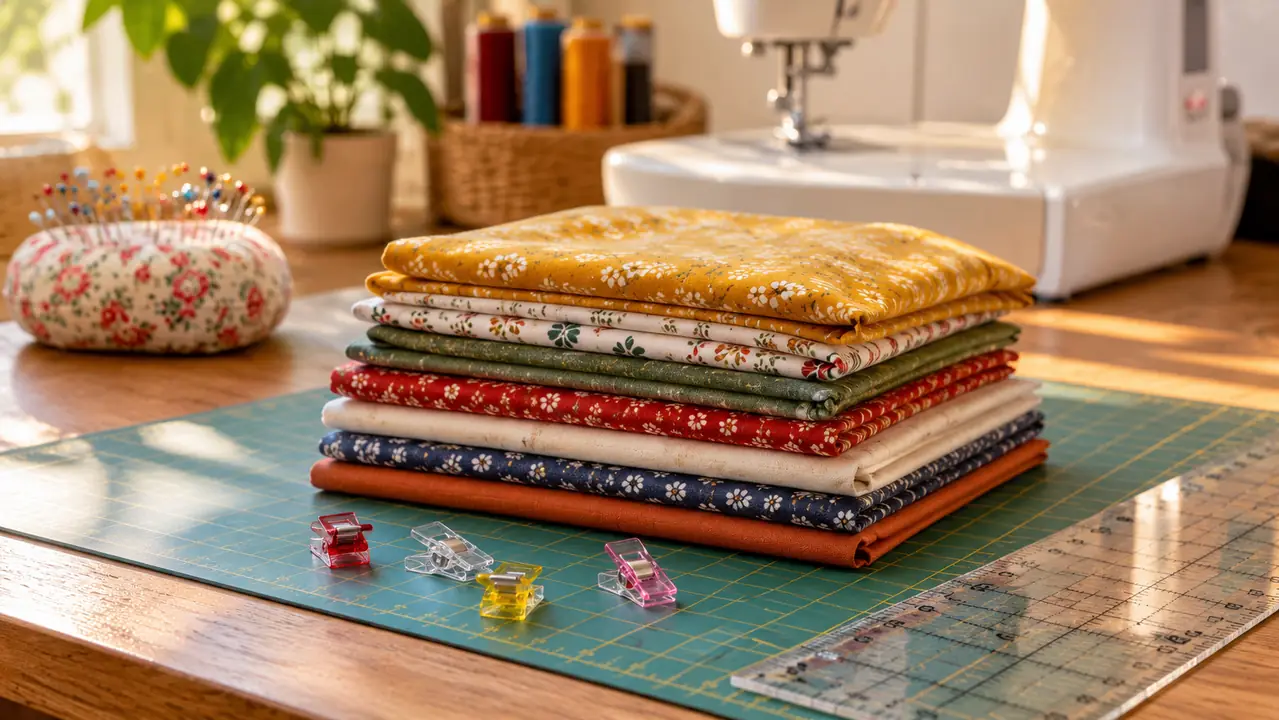
Stack the fabric, press down on the ruler with the flat of your hand, and a rotary cutter will go through four layers of cotton in one pass. A bodice front, a back and two facings stop being four separate trips around the table. Cut the same pattern piece in three sizes for three different women and the job is one afternoon instead of a weekend.
Your hands stop aching by the end of it
A shear is a small squeeze done several hundred times in a row, and it is the same two joints doing all of it. A rotary cutter is a push. The handle on this one is stainless steel and shaped to sit in the palm, and I notice the difference at nine in the evening more than I do at noon. Cutting is the one sewing job I no longer have to split across two days.
The blade stays where you set it
Cheap rotary cutters wobble, and a wobbling blade gives you a line with a small wave in it that shows up later in the seam. This one has an adjustable screw system holding the blade steady. You feel it in the first cut: a single clean line rather than a line that wanders. I tighten the screw once at the start of a session and then forget it.
Five spare blades means you swap instead of suffer
A dull blade is the reason a lot of sewists decide rotary cutters are no good. It skips, it drags, it leaves a fuzzy edge and you blame your technique. The Honey's Heaven set ships with five extra 45mm blades made from SKS-7 steel. When a blade starts to skip, change it. Blades are replaceable. A ruined length of wool is not.
The craft clips do the job the pins used to
The clips are the afterthought in the box and I use them constantly. Curves, bias strips, a neckline that will not sit still, a shoulder seam on a slippery lining. They hold two pieces together without puncturing them and without the pin holes that show on a fine fabric. I can clip a curved seam in seconds and sew it straight away.
Fewer ruined pieces and less fabric in the bin
The real saving is not the minutes. It is the mis-cuts. With shears I would get to the end of a bodice front and find the grain had wandered, and that piece was gone. With the ruler and the grid, the mistake shows up before the blade moves. Cutting fewer pieces twice has saved me more fabric in a year than any other change at the table.
What I'd Skip
None of this makes a rotary cutter a replacement for shears, and anyone who tells you otherwise sews differently from me. Tight curves, armscyes, a small notch at the shoulder, the inside of a facing: those still want a sharp pair of shears in your hand. A 45mm blade will not turn on a coin. I keep a pair at the machine anyway, for clipping into seam allowances and trimming a seam after it is sewn.
The one thing to plan around is mat size. A3 is 18 by 12 inches, which is generous for facings, yokes, pockets, collars and children's clothes, and tight for a long skirt panel. I cut those in two passes with the fabric folded, or slide the mat along as I go. If you cut full-length garments every day, a bigger mat is the sensible upgrade. If you sew in pieces, in the evenings, the way I do, this one is enough.
A dress I used to cut on the floor in two hours took forty minutes standing at my table, and the side seams met on the first pass.
Get off the floor and back to standing
The Honey's Heaven set is the cutter, five replacement blades, the A3 self-healing mat, the acrylic ruler and the clips, all in one box. It is the cutting setup I would hand a friend before she kneels down on the carpet one more time.
Amazon See the rotary cutter set on Amazon →