
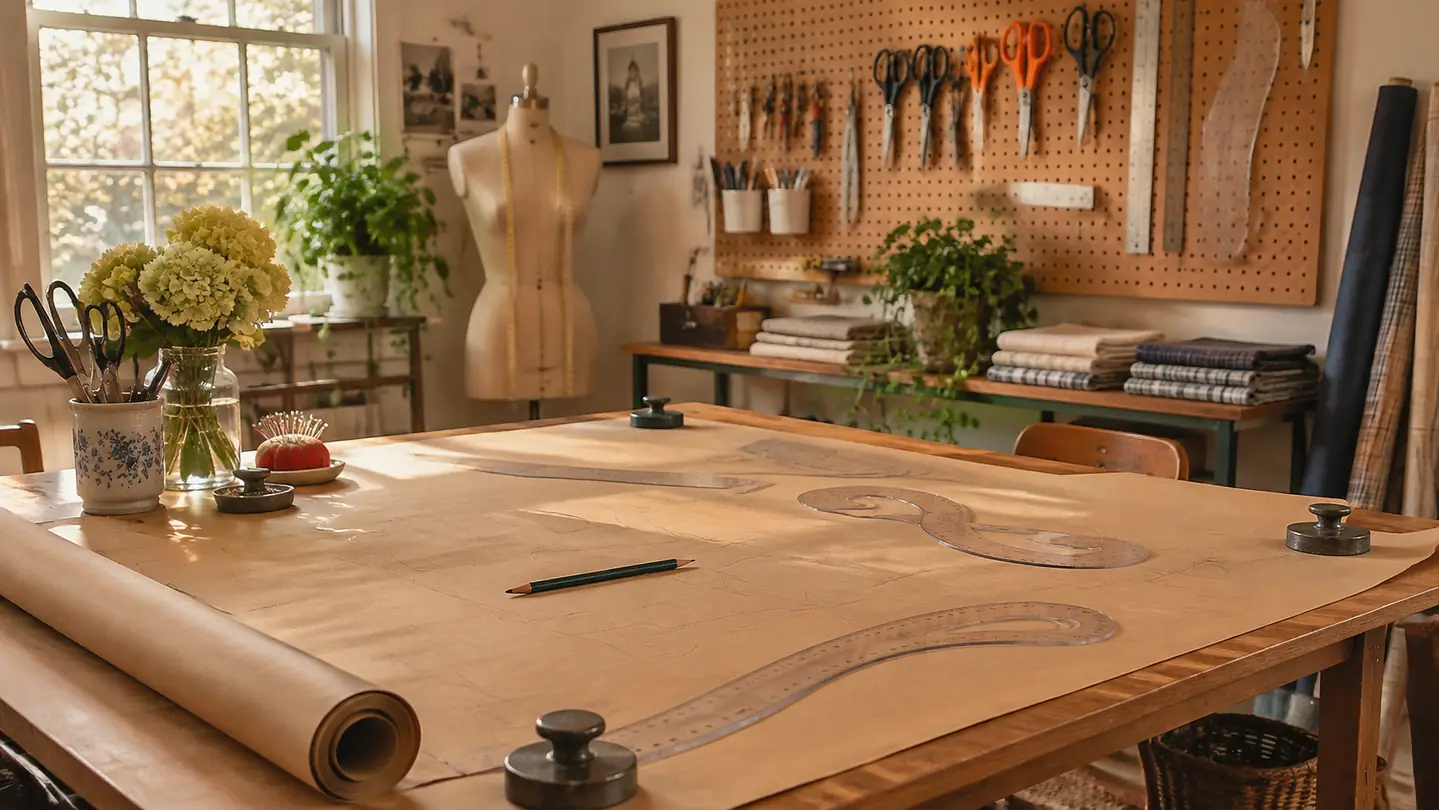
The first bodice I ever drafted from nothing was traced with a cereal box for a straight edge and a dinner plate for the armscye. It fit like a paper grocery bag with sleeves. That was more than thirty years ago and the lesson has held: the tools do not make the draftsperson, right up until the day they start to matter a great deal. I sew for myself, for my grown daughter and for my teenage granddaughter, three very different bodies in one house, and every one of those bodies has curves that a straight ruler simply cannot follow.
That is the gap the HLZC imperial sewing ruler and French curve set fills. Six pieces, all in inches, all cut from a clear flexible plastic, running from a 12 inch curve up to a pair of 24 inch grading rulers. It has hung on the pegboard in my sewing room for the better part of a year now, through a winter coat muslin, a run of summer dresses for my granddaughter and a steady parade of alterations for neighbours. Here is what the set actually does, where it earns its hook on the wall and where I still reach for something else.
The Quick Verdict
A complete, no-nonsense drafting kit for the home sewer. The 24 inch hip curve and the two grading rulers do the serious work, the 12 inch curve handles armholes and necklines, and the whole set is in inches with 1/8 inch markings. The plastic flexes under a heavy hand and the print will not last forever, but for a home cutting table it covers every curve you will draw.
Amazon Check Today's Price →The curve ruler I reach for before any other
Six pieces, inches throughout, 1/8 inch graduations, from a 12 inch armhole curve to a 24 inch hip curve and a pair of 24 inch grading rulers. If you draft or alter your own patterns, this covers the shapes a straight edge cannot.
Amazon Check Today's Price on Amazon →How I've Used It
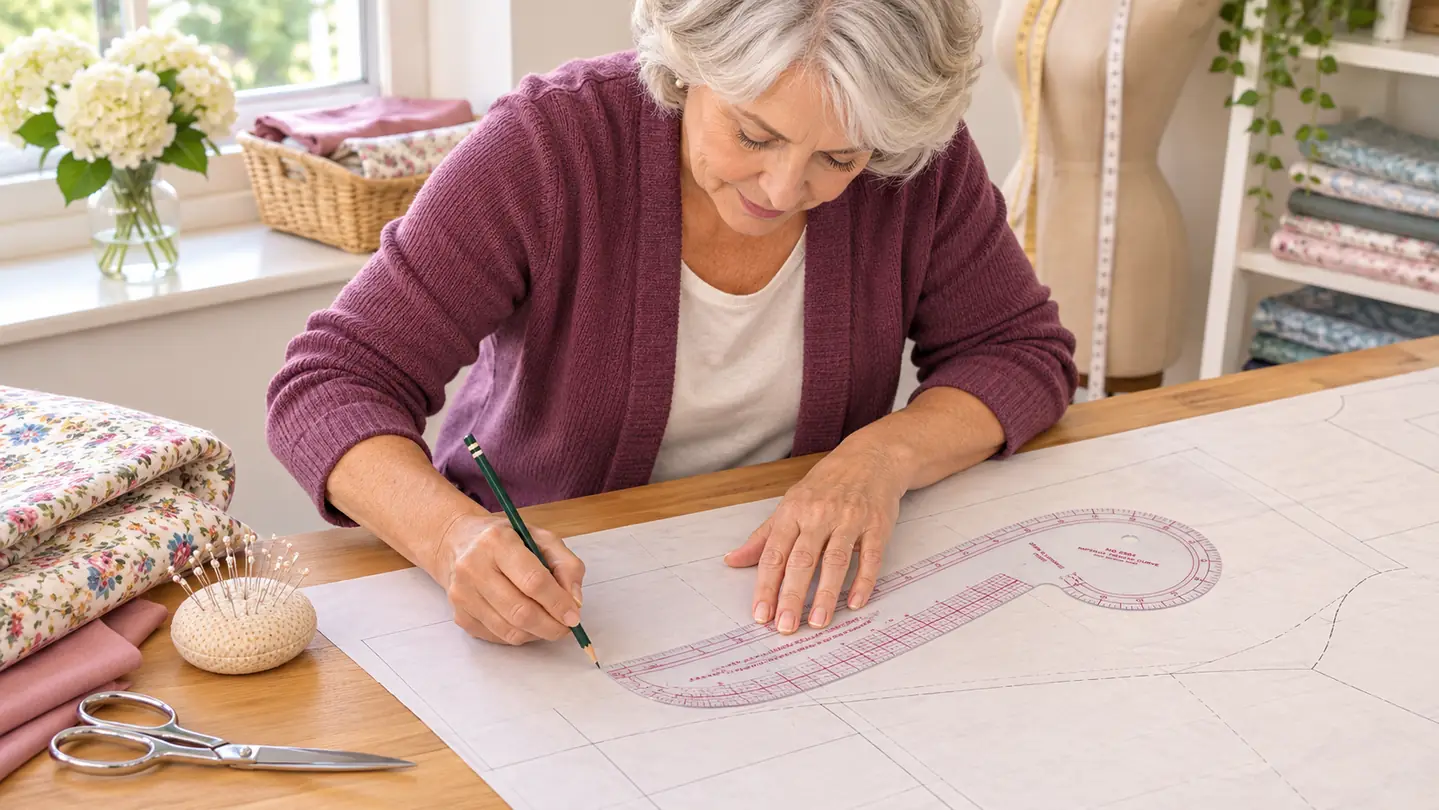
My first real job for the set was a princess seam on a bodice for my daughter. She is long waisted and narrow through the ribcage, and the standard commercial pattern gave her a side seam that pulled forward at the bust and gaped at the armhole. I pinned the muslin, marked where the seam needed to travel, then laid the 24 inch hip curve against the paper and drew the new line in one pass. That is the thing a plate or a cereal box cannot do: follow a long, slow sweep from underarm to waist without a wobble in the middle. The seam sat clean on the second toile and I did not have to re-cut the whole front.
The 12 inch curve got the most use over the summer. My granddaughter is fifteen and growing, and I re-drafted the same simple sleeveless dress three times between May and August, mostly through the armhole and the neckline. A short curve is the right tool for those: the radius is tight, and the smaller ruler lets you pivot around the shape without the far end swinging off the paper. She has worn all three versions, which tells you more about the drafting than about my sewing.
The rest of the year was alterations, which is where the measuring gauge quietly earns its place. Hem depths, seam allowances, the distance from a button to an edge, all of it marked and checked without dragging out a tape and hoping it stays put. In February a neighbour brought me a wool coat that needed three inches off the hem and the sleeves shortened to match. I set the gauge once at three inches, walked it around the hem marking every four inches or so, and the line came out level on the first pass. With a tape I would have marked, checked, re-marked and still found one spot a quarter inch out. The set hangs on two pegs and nothing in it is heavy enough to pull the board off the wall, which matters in a room the size of a spare bedroom.
What Each Piece in the Set Actually Does
The two 24 inch grading rulers are the pieces I underestimated. They are long, straight and marked with 1/8 inch graduations, and they are what you want when you are moving between sizes rather than drafting from scratch. My daughter sits between two sizes in the bust and another in the hip, and grading the pattern by hand means walking a series of points along a straight rule and moving each one a consistent amount. With one ruler on the original line and the other marking the new one, the job is quick and repeatable. Two of them is not a gimmick, it is the reason the grading comes out even.
The universal ruler is the generalist. Straight edges, square corners, a set of markings you will use for seam allowances and grain lines. It is the piece you leave on the table rather than hanging up, because you will pick it up a dozen times an hour.
The 12 inch curve ruler is for the small, tight shapes: armholes, necklines, small hip curves on children's clothes, the curve of a pocket bag. It is short enough to control with one hand and long enough to give you a smooth transition rather than a series of short straight lines pretending to be a curve.
The 24 inch hip curve is the star of the set for anyone sewing for adult bodies. Long, shallow, and shaped so that it follows the sweep from waist to hip on trousers and skirts and the curve of a lapel on a jacket. Last autumn I drafted a pair of wide leg trousers for my daughter, and both the crotch curve and the hip sweep came off this one ruler. What struck me was how little correction the toile needed at the back rise, which is usually where I lose an entire evening to pinning and unpicking. If you draft trousers, this is the piece you will fight over. The measuring gauge rounds out the six, and some of the rulers have a hole in them so they can hang rather than live in a drawer getting scratched.
Drafting for Three Different Bodies
The reason I care about a full set rather than one curve is that I am not drafting for one figure. My daughter is tall and straight through the ribcage with a fuller hip. My granddaughter is still changing shape every few months. I am sixty-one and my waist has moved and softened in ways it had not twenty years ago, and the crotch curve I drafted for myself at fifty needed drafting again at sixty. A single French curve would leave me short somewhere in that range. The 24 inch hip curve does the adult work, the 12 inch curve does the growing teenager, and the grading rulers move a pattern between the sizes without redrawing the whole thing.
There is a practical benefit to that beyond fit. When my granddaughter outgrows the bodice block I drafted for her in the spring, I do not start over. I grade it up and check the armhole with the small curve, and the job takes an evening rather than a weekend. The last time I did it, in June, I moved the bust dart down half an inch, added a quarter inch at each side seam and re-drew the armscye with the 12 inch curve. She tried the toile on a Thursday and wore the finished dress to a friend's birthday on the Saturday. That is the difference between a pattern that gets used and a pattern that lives folded in a box.
If you sew for one body only and that body has not changed in a decade, you can get by with less. But most of us are altering for somebody, and altering means the curve has to match a line that already exists rather than a line you invented.
Plastic Versus the Metal Hip Curve I Used for Years
I drafted with a metal hip curve for most of my sewing life. Metal is rigid, it does not bend, and if you drop it on a tile floor it stays true. The HLZC set is plastic, which is a real trade-off and worth being honest about. The upside is weight and visibility: the clear plastic lets you see the seam line and the fabric print underneath while you draw, and the rulers are light enough to hold steady with two fingers at the end of a long day.
The downside is flex. Press down hard at the far end of a 24 inch plastic curve and the middle lifts slightly off the paper. It is not much, but over a long seam it is enough to put a shallow wobble in a line you meant to be smooth. My fix is simple and it has worked for a year: hold the ruler at both ends and draw with a fine pencil held close to vertical, so the point sits against the edge instead of creeping under it.
Would I trade back? For trousers and long hip curves, no. The lightweight plastic and the clear edges suit the way I work now, and the full set covers far more shapes than the single metal curve ever did. If you cut a lot of heavy tailoring and want one rigid tool that never moves, the metal curve still has a case, and there is a fuller comparison of the two on this site if you want the detail.
The Plastic Question: Markings, Wear and Care
The markings are printed, and they are printed to be readable. That sounds like faint praise but it is not: I have drafted on dark navy wool and on white muslin in the same week, and the graduations were legible against both. The navy was a winter skirt block in November, the muslin a summer dress in the same fortnight, because I had put one off and then needed the other in a hurry. Under the lamp at the pressing end of the table the numbers on the HLZC rulers read the same on both, which is not true of every clear ruler I have owned. Every number is in inches, with 1/8 inch graduations on the straight rulers, and nothing in the set asks you to convert between systems mid-draft. For anyone who learned on imperial patterns, that alone removes a steady source of small errors.
The markings will not last forever. A year of regular use has left the most-used numbers on the universal ruler a little soft, and that is with me being careful. A rotary cutter laid against a plastic edge will nick it, so keep the mat and the cutter on the other side of the table. Store them hanging if you can, because a drawer full of notions will scratch the surface and the scratches are what make a clear ruler hard to read.
One more caution from experience: keep them away from the iron. Plastic that has been sat next to a hot iron for a while does not return to its original shape, and a curve that has warped is a curve you will fight with every time. Mine live on the pegboard, well away from the pressing end of the table.
What I Liked
- Six pieces cover the full range of curves most home sewers need, from a tight 12 inch armhole curve to a 24 inch hip curve
- The pair of 24 inch grading rulers makes moving a pattern between sizes straightforward and repeatable
- Everything is in inches with 1/8 inch graduations, so there is no converting mid-draft
- Clear plastic lets you see the seam line and the fabric underneath while you draw
- Light enough to hang on a pegboard, which keeps a small sewing room workable
- Markings stay legible on both light and dark fabrics
Where It Falls Short
- The plastic flexes, so a heavy hand can push the edge off a long line
- Printed markings soften with steady use and will not last a lifetime
- No metric graduations, which rules it out if you draft in centimetres
- The 24 inch rulers are awkward on a very small cutting table
- Rotary cutters and loose drawers will scratch the surface
The 24 inch hip curve is the piece I would replace first if it went missing, and it is also the piece that showed me my side seams had been slightly wrong for years.
Who This Is For
This set is for the home sewer who drafts or alters rather than only cutting commercial patterns as printed. If you grade between sizes because no single size fits your bust, waist and hip at once, the two long rulers justify the set on their own. If you sew for more than one person, especially people of different ages and shapes, the range from the 12 inch curve to the 24 inch hip curve means you are not improvising with a plate when a shape gets tight. And if you alter clothes for other people, the measuring gauge and the long straight edges will get used more than you expect. It is also a sensible first drafting kit for someone moving from commercial patterns into making their own blocks, because it covers the shapes you need before you know which single curve you would have bought.
Who Should Skip It
Skip it if you draft in centimetres. There is nothing metric in the set and converting by hand defeats the point. Skip it if you only ever sew commercial patterns exactly as they come out of the envelope and never adjust a seam: you will use the universal ruler and nothing else. Skip it if you want one rigid, heavy tool that will outlive you, because that is a metal hip curve and not this. And if you mostly quilt, the shapes here are dressmaking shapes, and quilters' rulers with their grid lines will serve you better. For everyone else at a cutting table with a pencil in hand, the HLZC set does the job it claims to do.
Six pieces that cover every curve on the pattern
Inches throughout, 1/8 inch graduations, from a 12 inch armhole curve to a 24 inch hip curve and a pair of grading rulers. If your side seams have never quite sat right, this is where the fix starts.
Amazon Check Today's Price on Amazon →