My daughter brought me a knit dress last spring with a side seam that had given up. Not the stitching. The fabric itself, fraying out from under a zigzag line that had never really held anything. I fixed it in about ten minutes on the Brother 1034D, and she stood at my elbow watching the raw edge disappear under the presser foot and come out the other side wrapped in thread. That is the whole argument, really. A zigzag sits on top of a raw edge and hopes. An overlock machine builds a new edge, then sews the seam to it.
I am not going to tell you zigzag is useless. I finished plenty of seams with it before I knew better, and I still use it for basting and for mending a hem at nine at night. But there is a reason every garment you have ever bought, from a jersey tee to a lined wool coat, has an overlocked seam inside it. The finish is flatter, it stretches with the cloth, and it stops the fraying at the source instead of slowing it down. Here are ten reasons the Brother 1034D earns its place at the end of my cutting table, in the order I would explain them to a friend.
The Seam Nobody Sees Is the One That Lasts
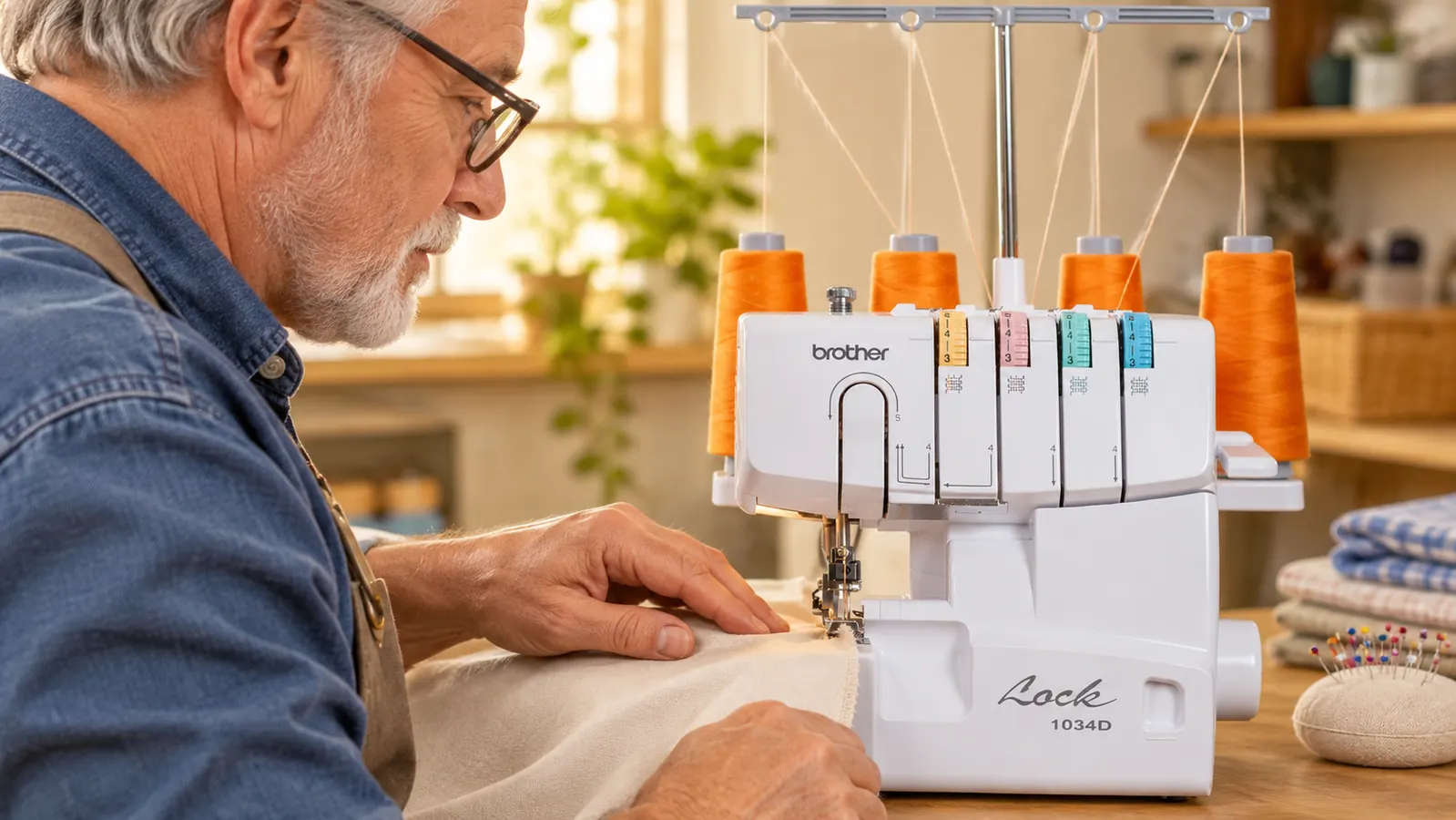
A serger is the difference between a garment that survives a wash and one that unravels in the laundry bag. The Brother 1034D is a 3 or 4 thread overlock machine with a metal frame and a foot pedal that lets you set your own pace.
Amazon Check today's price on Amazon →One Pass Instead of Four
With a zigzag you trim the edge with pinking shears, stitch the seam, press it open, then stitch the raw edge again. Four steps per seam, eight per garment, and every one of them a place to lose your place. On the serger you feed the raw edge in and it comes out finished. I made three knit skirts for my granddaughter in an afternoon, and the sewing was the same amount of work. It was the finishing that disappeared.
Knits Stop Buckling at the Seam
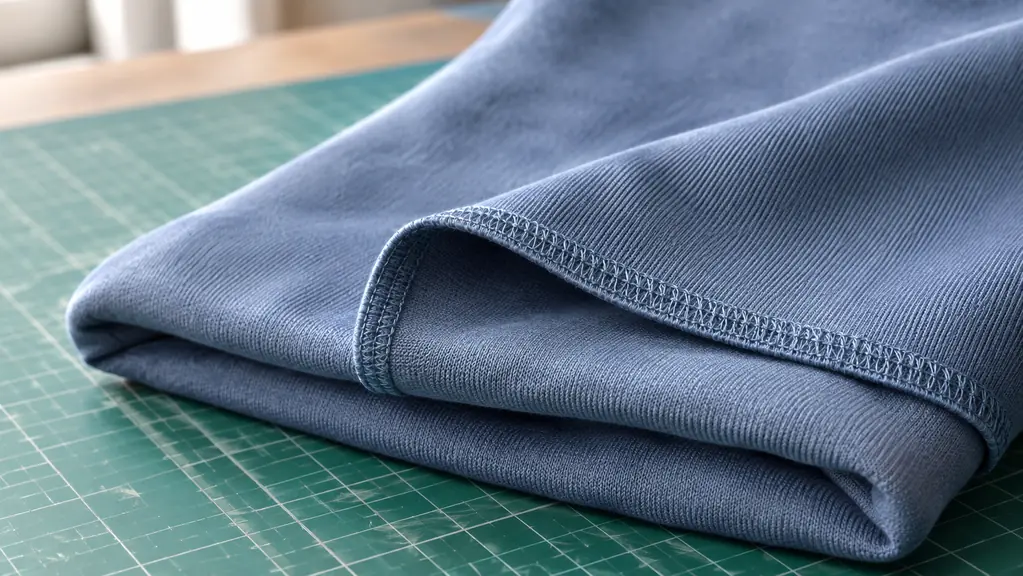
A zigzag on jersey puckers, tunnels at the needle, and goes wavy along the whole length. The overlock stitch has give built into it, so the seam stretches when the fabric stretches and lies flat when it relaxes. That is not a small thing. It is the difference between a dress that hangs properly over the hip and one that pulls into a ridge every time she sits down.
It Takes Bulk Without Complaint
The 1034D is built to handle multiple layers of denim and other heavy materials, and I have tested that claim on my granddaughter's jeans. Hemming jeans on a regular machine means a hump of folded seam allowance under the presser foot, a bent needle, and words I will not repeat here. The serger goes through the same bulk and leaves a flat, wrapped edge behind it. I keep a pair of her old jeans in the scrap bin just to test a new needle.
Speed You Set With Your Foot
It sews up to 1,300 stitches per minute, and the included foot pedal means the machine only goes as fast as you press. That matters more than the number suggests. A long straight seam, the outside leg of a pair of wide leg pants, a curtain hem, all of it goes quickly. The tight curve at an armhole slows down because your foot does. I learned to sew on a machine with one speed, and it was the wrong one.
Threading Is Learnable
Every woman who has avoided a serger has avoided it for the same reason. The threading. Four threads, two loopers, a path that looks like a wiring diagram for a small house. The Brother has color-coded upper thread guides and a lower looper threading system, and the included manual walks the whole path with you. My first attempt took forty minutes and included one strong opinion about engineers. The second took four. I re-thread from scratch before every project now, and it is no more annoying than winding a bobbin.
Three or Four Threads, Your Call
It is a 3 or 4 thread machine, so you match the setup to the cloth instead of the other way around. Four threads for a woven that frays, a linen, a wool crepe, a shirt weight cotton. Three threads on a knit where you want less bulk sitting in the seam. The changeover takes a few minutes and a look at the manual, and after a while your hands know which needle to pull.
It Fits a Real Sewing Room
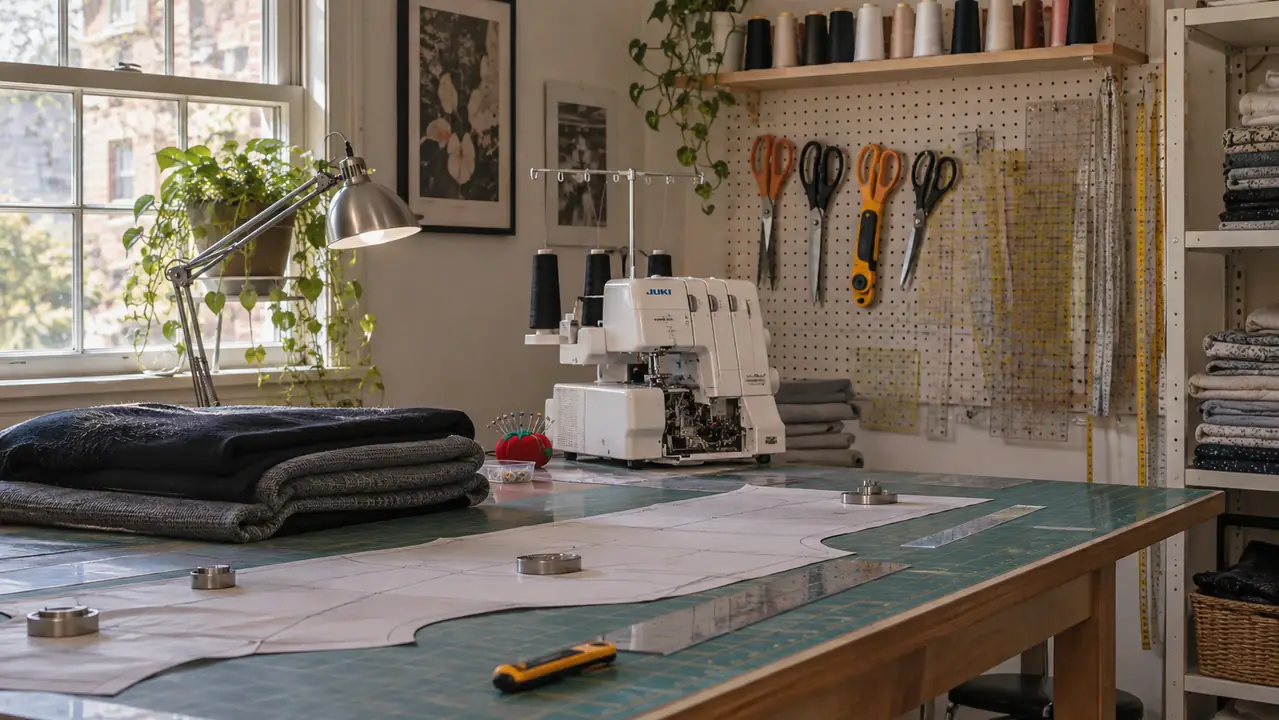
Ten inches deep, eleven wide, thirteen high, and eight pounds. Mine sits at the far end of my cutting table under its soft cover, and I can lift it onto the shelf when the table needs to be clear for laying out a pattern. If your sewing room is a converted spare bedroom the way mine is, that footprint is the entire conversation. A machine that has to be unpacked and repacked does not get used.
The Frame Holds Still
The metal frame and metal interior components are the reason this machine does not shiver its way across the table when you hit a thick seam. A serger that walks while you sew gives you a wavy finished edge and a sore shoulder by the end of the afternoon. This one stays where you put it. That sounds like a small thing until you have spent a day on one that does not.
It Arrives With What You Need
Four large spools of serger thread, a soft cover, an accessory bag with a needle in it, and the instruction manual. That is not a marketing list. It is the difference between opening the box and sewing that evening and opening the box and driving to the fabric store. The warranty runs five years on parts and ninety days on labor, which tells you plainly what the maker expects of it.
The Inside of the Garment Matches the Outside
This is the reason I bought one, and it took me years to say it out loud. I make clothes for three women with three very different bodies, and when I get the fit right I want the inside to look like somebody decided something. An overlocked seam allowance lies flat and even from waist to hem. You can open a jacket you made yourself and not wince. A neighbour who used to alter clothes with me said a good finish is the only part of a garment nobody compliments and everybody feels.
What I'd Skip
A serger does not replace your sewing machine, and I would skip this if you expect it to. It cannot make a buttonhole, set a zip, or topstitch a hem. It finishes edges, and it does that one job better than anything else on the market. You will still need the other machine for everything the world actually sees.
Skip it too if you only sew stable wovens and never look at the inside of your work. Pinking shears and a hot iron will carry you a long way, and your time is better spent on fabric and fit. And skip the bargain cone thread. The machine is only as good as what you feed it, and a thread that snaps halfway down a seam undoes the entire advantage you just paid for.
Eight pounds, ten inches deep, and it lives at the end of my cutting table where I can reach it without standing up.
Learn It Once, Finish Everything After
The threading takes an afternoon. The finish it gives you lasts as long as the garment does. If you sew for yourself or for the women in your family, the Brother 1034D is the machine that makes the inside of your work worth looking at.
Amazon See the Brother 1034D on Amazon →