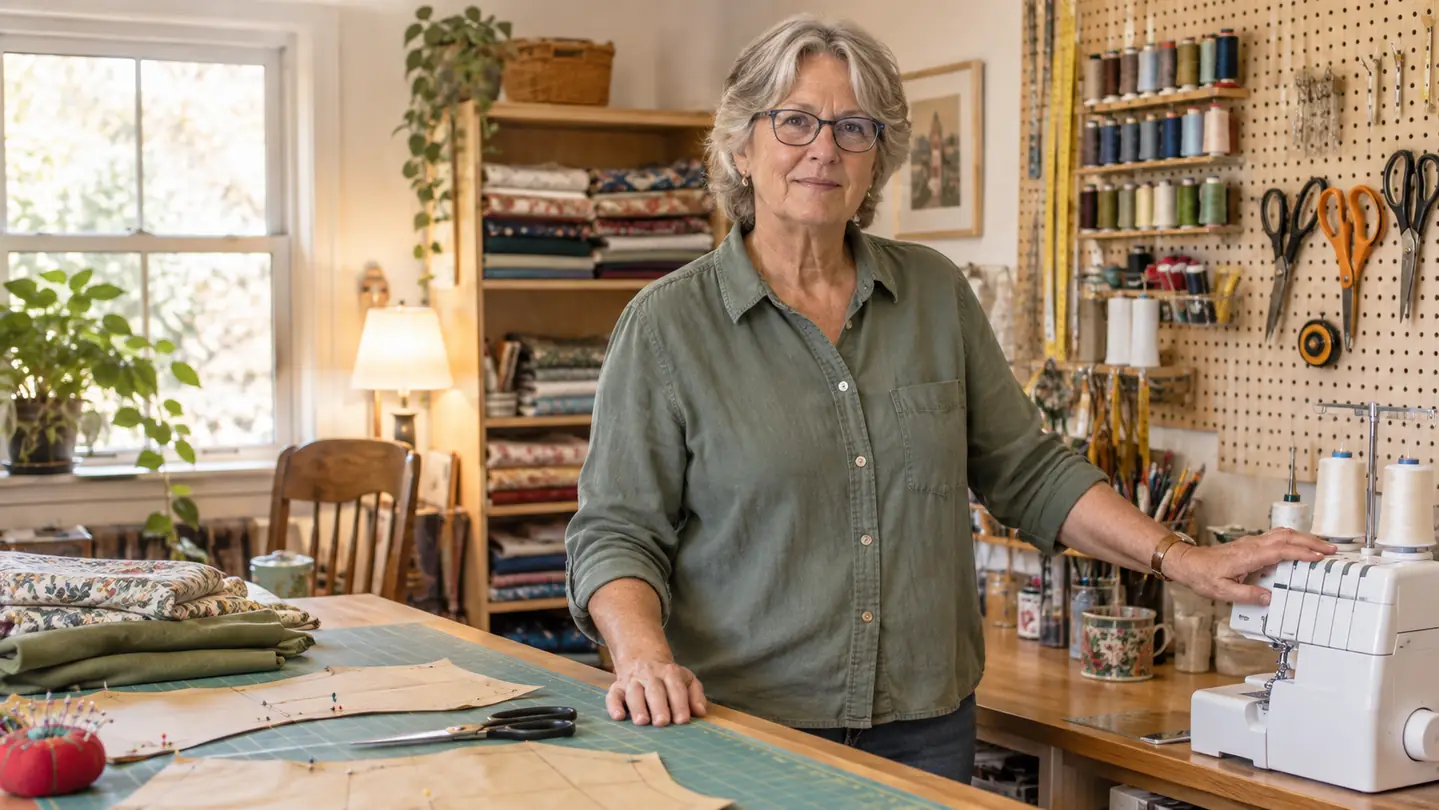
For years I finished every seam on my regular sewing machine, and for years those seams told on me. A knit dress looked lovely on the hanger and then puckered along the side seam the first time my daughter pulled it over her head. I pressed it flat, promised myself I would do better, and went back to the same zigzag stitch that had already failed twice. What I actually needed was a machine that trims the raw edge and wraps it in one pass. What I was afraid of was threading one.
A serger carries four threads through two loopers, and the threading chart looks like a map of a small airport. I put the purchase off for three years. Every winter I would read the same reviews, close the tab, and hem another skirt by hand. Then my granddaughter asked for a dance skirt in a stretch velvet, and I knew the zigzag was going to show on the inside where she would see it every time she pulled it on.
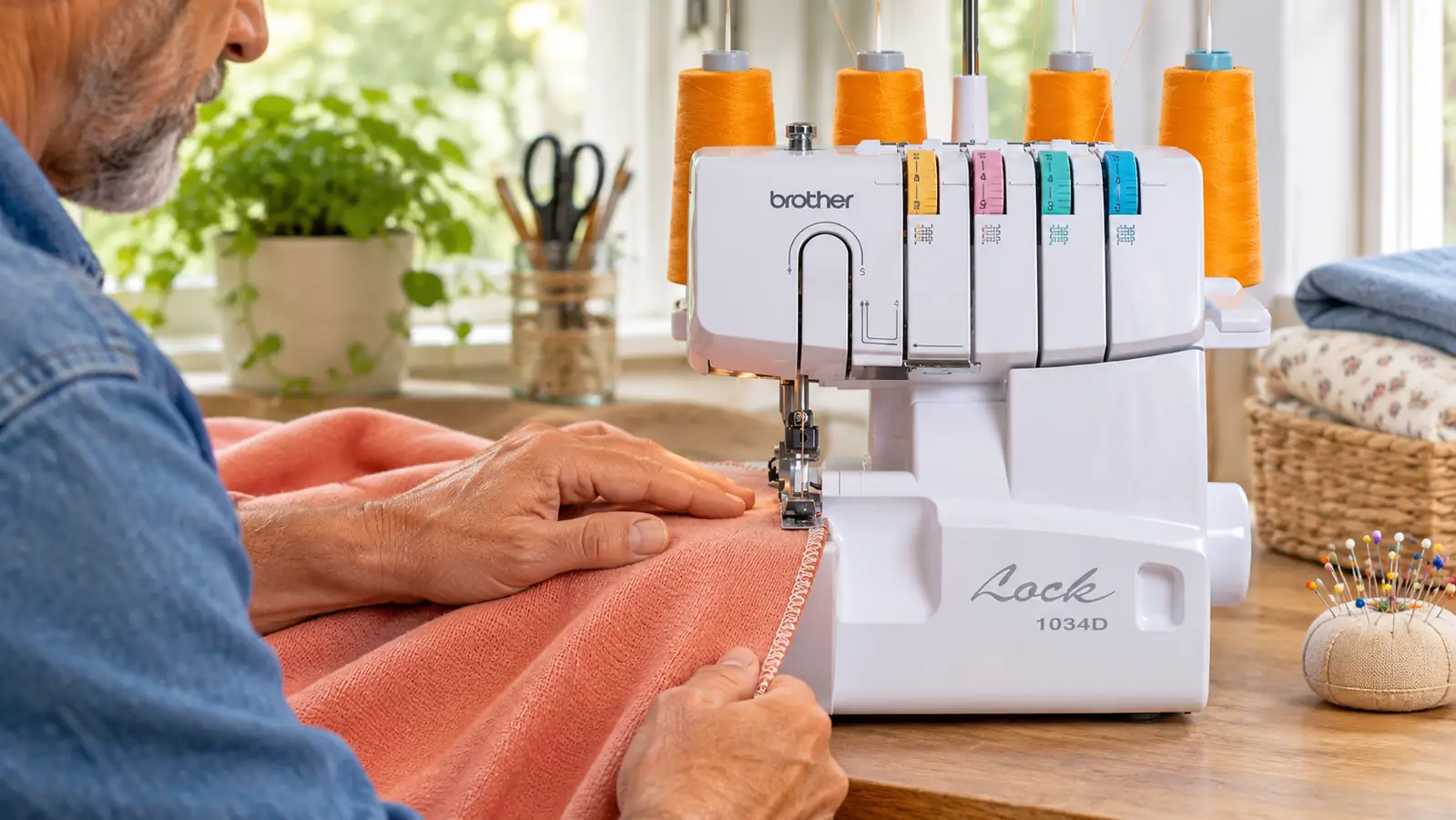
So I bought the Brother 1034D. It is a 3 or 4 thread overlock, eight pounds, ten inches deep and thirteen tall, so it sits at the end of my cutting table without taking the whole table over. Four large spools of serger thread came in the box, along with a soft cover and an accessory bag with needles. I read the manual twice before I plugged it in, which turned out to be the right call.
The first threading took me forty minutes. I want to be honest about that, because reviews calling it easy were written by people who have threaded a serger before. What the Brother has going for it is a color-coded upper thread path and a lower looper marked in the same colors, so when I lost my place I could follow the guide back instead of starting from the beginning. By the fourth time it took eleven minutes. Now I rethread it standing up while the kettle boils.
The first seam was a scrap of the velvet. The machine trimmed the edge, wrapped it, and the fabric stopped curling. I ran six more scraps through just to watch it work. The foot pedal gives me the speed control I want coming into a curve, and on a long straight seam it will sew up to 1,300 stitches per minute, which is faster than I will ever need to go.
Forty minutes to thread it the first time. Eleven the fourth. The puckering stopped on the first seam and has not come back.
The machine that ended my zigzag compromise
A 3 or 4 thread overlock with color-coded threading, a soft cover, four spools of thread and the manual in the box. It handles knits, denim and everything between.
Amazon See the Brother 1034D on Amazon →Since then the Brother has taken everything I have put under it. The listing says it handles multiple layers of denim, and I tested that on a pair of my daughter's jeans that needed four inches off the hem. It went through the flat-felled side seam without a wobble. French terry, ponte, a boiled wool coat lining and a stack of dance skirts have all gone through since. The velvet is still the thing I am proudest of.
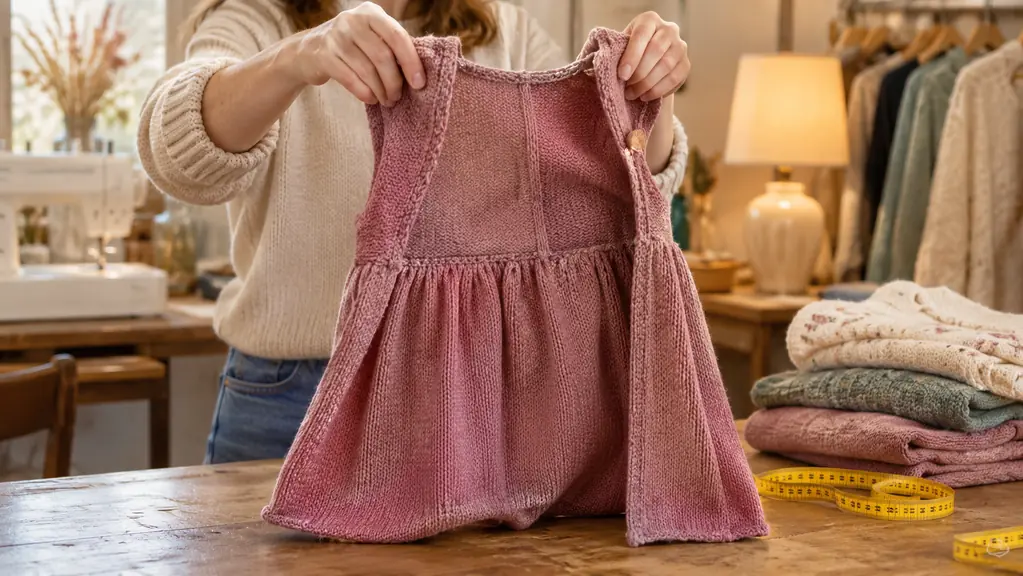
Sewing for three generations means three different bodies, and that is where a serger earns its place. My daughter is long-waisted and buys dresses that fit everywhere but the shoulder. My granddaughter is fifteen this year and changing shape every few months. I am sixty-one and want a waistband that does not dig by two in the afternoon. A seam finish that stretches with the fabric is what makes those adjustments wearable instead of fragile, and the overlock does it in one pass, so a hem I used to skip now takes four minutes.
It is not a coverstitch machine. If you want the twin needle look on a hem, that is a different purchase and I will not pretend otherwise. It is louder than my sewing machine, and it leaves a small pile of trimmings under the table every time, which I now sweep without thinking about. The manual is worth keeping in the drawer rather than the shelf, because it lists starting points for knits, wovens and heavy fabrics and I still check it when I change what I am sewing.
A machine you have to unpack is a machine you will not use. At ten by eleven by thirteen inches the Brother stays at the end of the table, threaded, and it goes through almost everything that comes off the other machine. That is the whole reason it earns its keep in a room this size.
The warranty is five years on parts and ninety days on labor, which is worth knowing before you buy. I have not needed it. The listing carries more than twelve thousand reviews and mine is one more saying the same thing: this is a machine built for the job it does, and the job is finishing seams.
What I'd Tell You If We Were Sitting at My Kitchen Table
I would tell you the fear is worse than the threading. I would tell you to buy four cones in colors you actually sew and leave them on the machine instead of changing them for every project, because the changing is what makes people give up on a serger. I would tell you to thread it with the manual open on the table for the first three times and to expect the fourth to be easy. And I would tell you the goal is not a fancy machine. The goal is a dress that survives a wash and a seam your granddaughter does not have to hide.
The one I stopped putting off for three years
If your seams are still the weak point in clothes you otherwise love, this is where I would start. Eight pounds, one foot pedal, and a manual that tells you the truth about threading.
Amazon Check the Brother 1034D on Amazon →