I bought the Brother 1034D because the insides of my garments embarrassed me. I had finished seams the way my mother taught me, a zigzag stitch and a prayer, and it held up fine until it did not. Last spring I made a linen dress for my granddaughter, she wore it one afternoon, and by dinner the side seam had frayed into a fringe. Forty-odd years at a machine and I still could not produce an enclosed edge without folding the allowance twice and stitching it down. That was the end of my patience.
A serger does one job. It trims the seam allowance as the fabric moves through, wraps the raw edge in thread, and locks it. The Brother 1034D is the machine a lot of home sewers land on first, mostly because it is not fussy and it does not ask much of you. It weighs eight pounds. The frame and the interior parts are metal. I lift it off the cutting table when I need the surface and set it back when I do not. Nothing about it behaves like an instrument that has to be handled with care.
The Quick Verdict
The most useful second machine a home dressmaker can own, as long as you accept that threading it is a skill you learn slowly and badly before you learn it well.
Amazon Check Today's Price →Nobody looks at the inside of a garment until the day they do
A serger turns a raw edge into a finished one in a single pass. The Brother 1034D sews at up to 1,300 stitches per minute and comes with four large spools of serger thread so you can start the day it arrives.
Amazon Check Today's Price on Amazon →How I've Used It
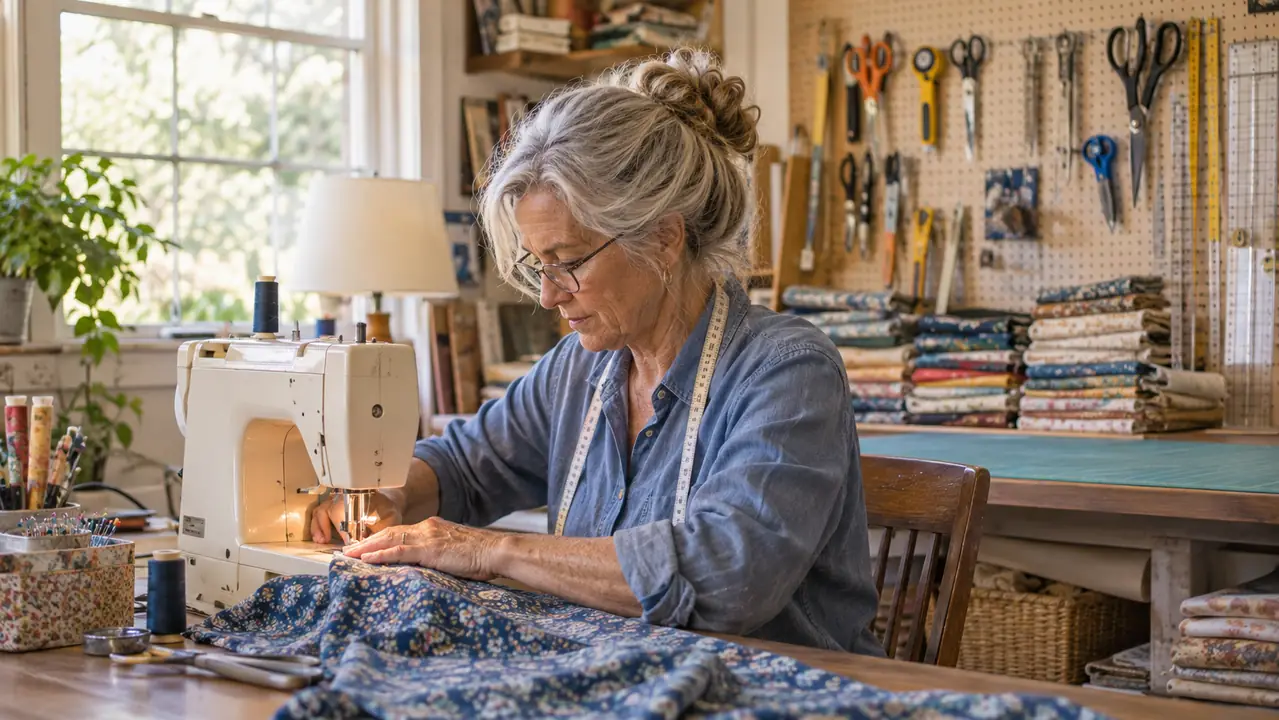
I sew for three people: myself, my grown daughter, and my teenage granddaughter. Three different shapes, three different sets of opinions about what a garment should do. My daughter is long in the torso and short in the sleeve, my granddaughter is still growing into her shoulders, and I have finally settled into a shape I can draft for without measuring twice. That means a lot of test garments, a lot of seam ripping, and a lot of fabric that never becomes anything. What it also means is that most seams get sewn twice, once to check the fit and once for real, and the second one has to hold up to actual wearing.
In the past year the Brother has run through cotton lawn, linen, a wool crepe skirt that nearly defeated me, jersey for two dresses, and one pair of jeans I made mostly to see whether I could. The jeans went together in October from a length of dark denim I had been saving for two years because I was afraid of ruining it. Four layers of denim at a cross seam is where a light machine either commits or stalls, and this one committed. It did not love it. The needle made a noise I did not care for, and I stopped twice to let the machine catch up with itself. But the seam came out flat and enclosed, and those jeans have been worn weekly since.
Where it earns its place is speed. My old routine was a zigzag, then a trim, then a second pass on anything prone to fraying. Three operations and three chances to go crooked. Now I run one seam and I am done. The dress I made for my granddaughter in June, a cotton poplin with a gathered skirt, had eleven seams in the bodice and skirt alone. Eleven seams times three operations is thirty three trips through the machine, and that is before anything goes wrong. Scaling that up across a year of garments is the whole argument. It is not a small thing. It is the difference between finishing a garment in an evening and finishing it across three.
Threading Is the Whole Learning Curve
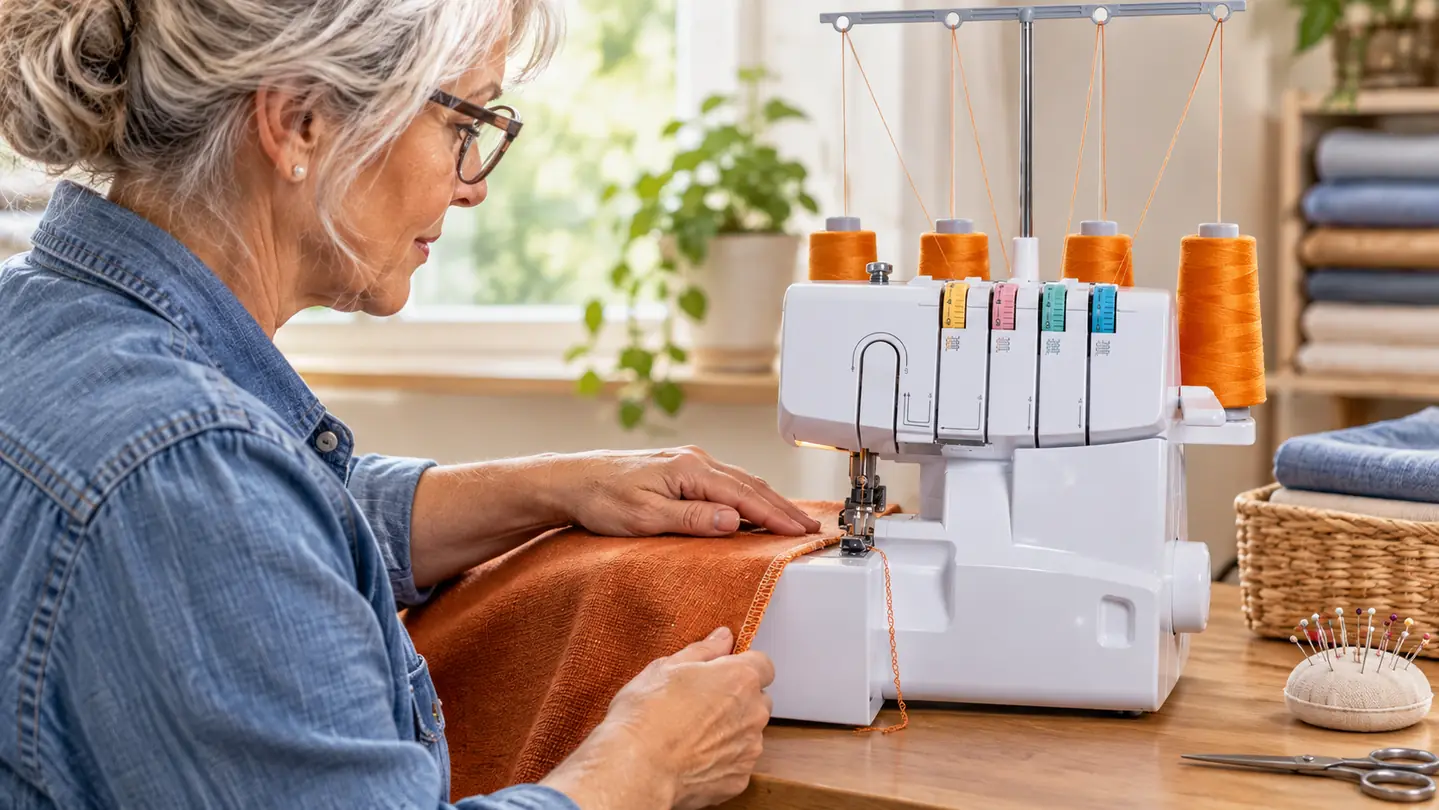
I will not pretend this part is easy. A serger carries four threads and two loopers, and the lower looper in particular is threaded by feel, upside down, in a space too small for a hand to be comfortable in. The first time I did it I was on the floor with a flashlight and the manual open on my chest. It took forty minutes, and I got one thread wrong. The machine sewed a chain that looked like a rope, and I had to start over from the beginning with the thread I had skipped.
The Brother helps as much as a machine can help. The upper thread guides are color coded, and the manual walks you through the order in a way that actually matches what you are looking at. The lower looper threading system is the part people complain about and they are right to complain, but it is a technique rather than a difficulty. Once I had done it badly four times I could do it well in a couple of minutes. I keep the manual in the drawer under the table anyway, because there is one step in the lower looper path that I will forget if I go six weeks without threading. I now rethread from scratch whenever I change all four threads instead of knotting and pulling through. It is faster, and it is less likely to leave a looper thread sitting outside the guide where it does not belong.
Where I still slow down is changing thread colors on all four cones at once. That is a twenty minute job with a cup of tea in the middle of it. Most of the time I do not bother. I keep a neutral thread in all four positions and let the seam be a seam.
What Four Threads Give You That Three Do Not
The machine sews with three threads or four, and the difference is not cosmetic. Four threads produce a wider, stronger seam with a safety stitch running alongside the overlock. That is what I use on side seams and armholes of anything woven that will be washed hard, which is everything I make for a teenager.
Three threads give a narrower, lighter seam. I use that on lightweight fabrics where four threads would make the allowance stiff and let it show through as a ridge on the right side. Cotton lawn and fine linen both want the three thread setup. It is also the setting I reach for on small pieces, bias strips and the like, where a heavy seam is more bulk than the fabric can carry.
What four threads also buy you is confidence at the start of a seam. The chain forms quickly and the trimming happens as you go, so the edge is enclosed from the first inch rather than the third. On a curved armhole, where I used to get a small flare of frayed fabric at the beginning, I now get a clean start and one less thing to pick at.
A Year of Actual Garments
The rough tally: six dresses, three skirts, two pairs of trousers, the jeans, a linen shirt for my daughter, and a stack of alterations that would otherwise have gone to a tailor. The alterations are where a serger is quietly underrated. Taking in a side seam on a ready made garment means cutting away the old finish. A serger lets me re-finish it in one pass instead of hand overcasting it, which I did for years and do not miss. In February I took in four pairs of my daughter's work trousers in a single afternoon. That would have been a week of evenings before.
The failures were mine and not the machine's. Early on I serged a seam before checking the fit, which is a permanent decision made quickly. I serged straight through a pin, which is a loud way to learn. I serged the corner where two seams met and got a lump of thread bulk that had to come out with a seam ripper, and unpicking a four thread seam is slow, miserable work. Twenty minutes of unpicking for four seconds of sewing is a ratio I have learned to respect.
The one thing I have not solved is what to do with the thread chain at the end of a seam. Every serger leaves a tail. I have tried knotting it, threading it back under the seam with a hand needle, and simply trimming it short. I now keep a small dish on the table where the trimmed tails go, and it fills faster than you would think. Trimming is what I do. It is not elegant. Nobody has ever looked at the inside of my seams and complained.
Where It Struggles
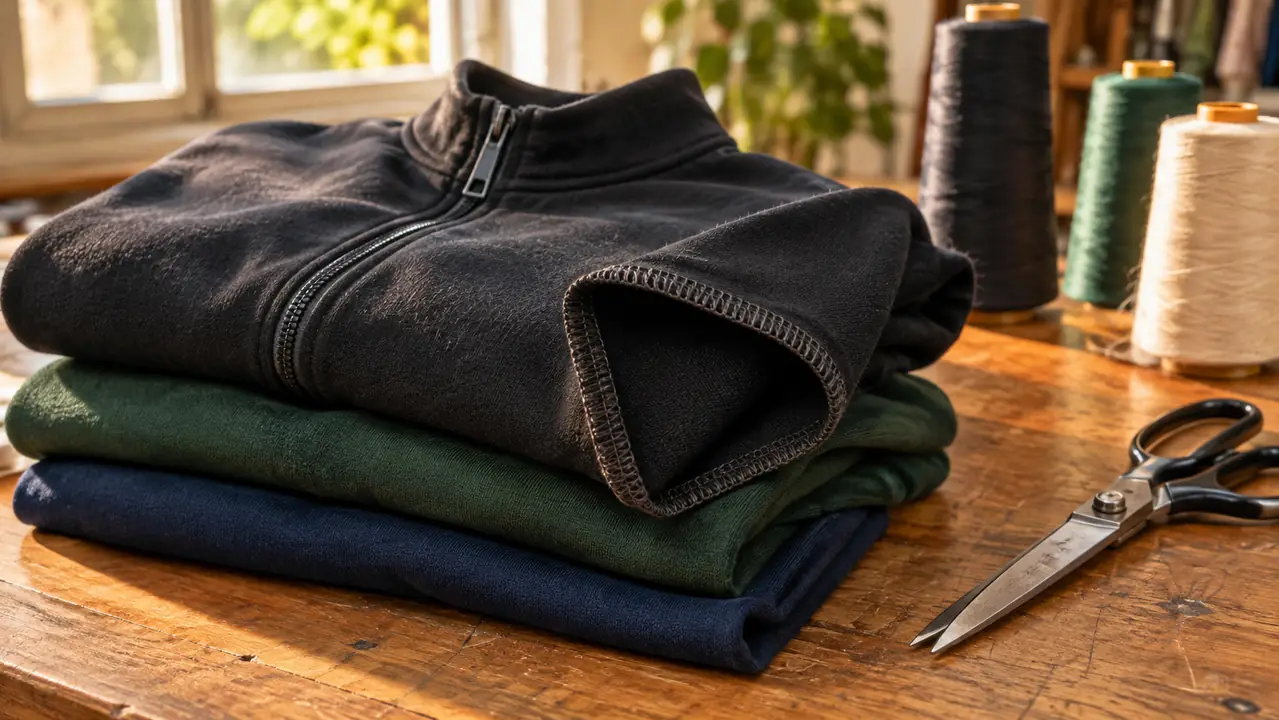
Bulk. Where several seams converge, at a crotch or a set in sleeve, the machine will push through but the result is thick and the needles complain. I trim those junctions by hand before serging and it helps. On the wool crepe skirt I made in January, the waistband join came to five layers, and I ended up constructing that join on my regular machine and serging only the edges separately. If you are building heavy outerwear or routinely working with many layers at once, this is a home machine doing a home machine's work, and it will tell you so.
It is also loud. Not damaging loud, just the sound of a machine doing 1,300 stitches a minute in a small room. I moved mine to the far end of the cutting table and put a mat underneath it. My daughter says she can hear it from the driveway, which I choose to take as a compliment.
And the tension. Getting four threads balanced took me an evening of sewing on scraps and swearing quietly. Once it was right it stayed right through several fabric changes, but every time I move from a knit to a crisp woven I check it again on a scrap. I keep a shoebox of offcuts sorted by weight for exactly that purpose, and it is the least glamorous thing in my sewing room. That is a serger habit rather than a Brother problem, but it is part of the real cost of owning one.
Living With It in a Spare Bedroom
My sewing room is a converted bedroom with one long cutting table and a pegboard wall. Space is not generous. The Brother is ten inches deep, eleven wide and thirteen tall, so it sits at the end of the table without crowding me. When I am drafting patterns I move it to a shelf. Eight pounds is light enough to do that one handed, which matters more than I expected it would.
It arrives with a soft cover, an accessory bag with needles, and four large spools of serger thread, which meant I could sew the day it came rather than waiting on an order. The warranty is five years on parts and ninety days on labor. That is a useful thing to know before you buy and an easy thing to forget afterward.
What I Liked
- Encloses a raw edge and trims the seam allowance in a single pass
- Handles multiple layers of denim and other heavy materials without stalling
- Sews up to 1,300 stitches per minute, which changes how long a garment takes
- Sews with three threads or four, so the seam weight can match the fabric
- Eight pounds with a metal frame and metal interior components, easy to move
- Color coded upper threading and a manual that explains the order clearly
- Four spools of thread, a soft cover and a needle bag in the box
- Five years on parts, ninety days on labor
Where It Falls Short
- Lower looper threading is genuinely fiddly and takes practice
- Loud in a small room
- Bulky seam junctions need trimming by hand before you serge them
- Tension wants rechecking when you change fabric weight
- Every seam leaves a thread chain you have to deal with
Four layers of denim at a cross seam and it did not stall. It complained. It did not stall.
Who This Is For
This is for the home sewer who has moved past simple constructions and is tired of the inside of her garments looking unfinished. If you make clothes for other people, or for people who are hard on clothes, the seam strength alone justifies it. If you do a lot of alterations, the speed at which you can re-finish a cut seam will change how willing you are to take that work on at all.
Who Should Skip It
If you sew once a month and mostly straight seams on quilting cotton, you do not need a serger and the threading will make you resent it. If what you actually want is coverstitching for knit hems, this is not that machine and no amount of wanting will make it one. And if you are not prepared to spend an evening threading it badly before you thread it well, spend your money elsewhere. A serger that lives in a cupboard because it intimidates you is a waste of a good tool.
One pass instead of three, on every seam you sew
The Brother 1034D trims, wraps and locks a raw edge in a single pass, with three or four threads, at up to 1,300 stitches per minute. Four spools of thread come in the box.
Amazon Check Today's Price on Amazon →