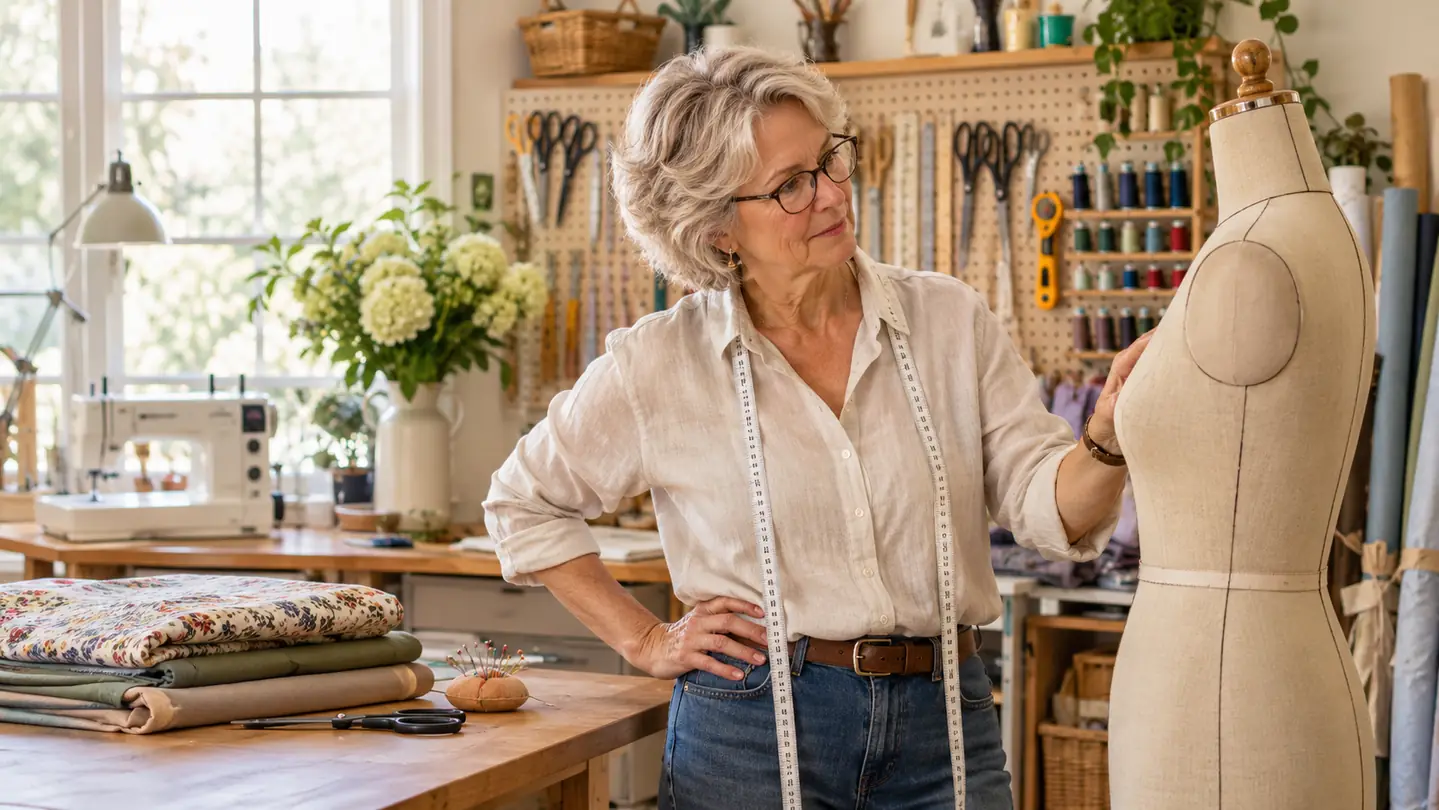
Every garment I have ever gotten wrong, I got wrong flat. On the table, cut from a pattern that matched my measurements on paper, the pieces looked fine. On an actual body the thing pulled across the bust, or the side seam swung forward, or the hem hung half an inch off level at the front, and I only found out after the facing was sewn down and the seam allowances trimmed too short to fix anything.
For years my workaround was to make whoever I was sewing for stand still while I circled them with pins in my mouth. That works exactly once per person per season. The Dritz Sew You is the form on my stand now, and it does the one thing a fixed mannequin cannot: it stops being a single body and becomes whichever body I am sewing for this week. That is the whole argument, and the ten reasons below are just the details of it.
Set the form to your own numbers, then see the garment before you cut
Twelve adjustment points, a height-adjustable center pole and a full-length body. If your cutting table has been telling you a comfortable story, this is the second opinion you have been missing.
Amazon See the Dritz Sew You on Amazon →You see the back of the garment while it is still changeable
Most of my fitting mistakes live in the back. A center back seam, a shoulder slope, a waist that dips at the spine: none of that exists when a garment is lying flat on the table. Put it on a form, walk around behind it, and the problem is right there in daylight. I have unpicked far fewer back seams in recent years than in the twenty before them, and the reason is not that I got smarter. It is that I finally looked at the back of a thing before it was finished.
Twelve adjustment points cover three generations of bodies
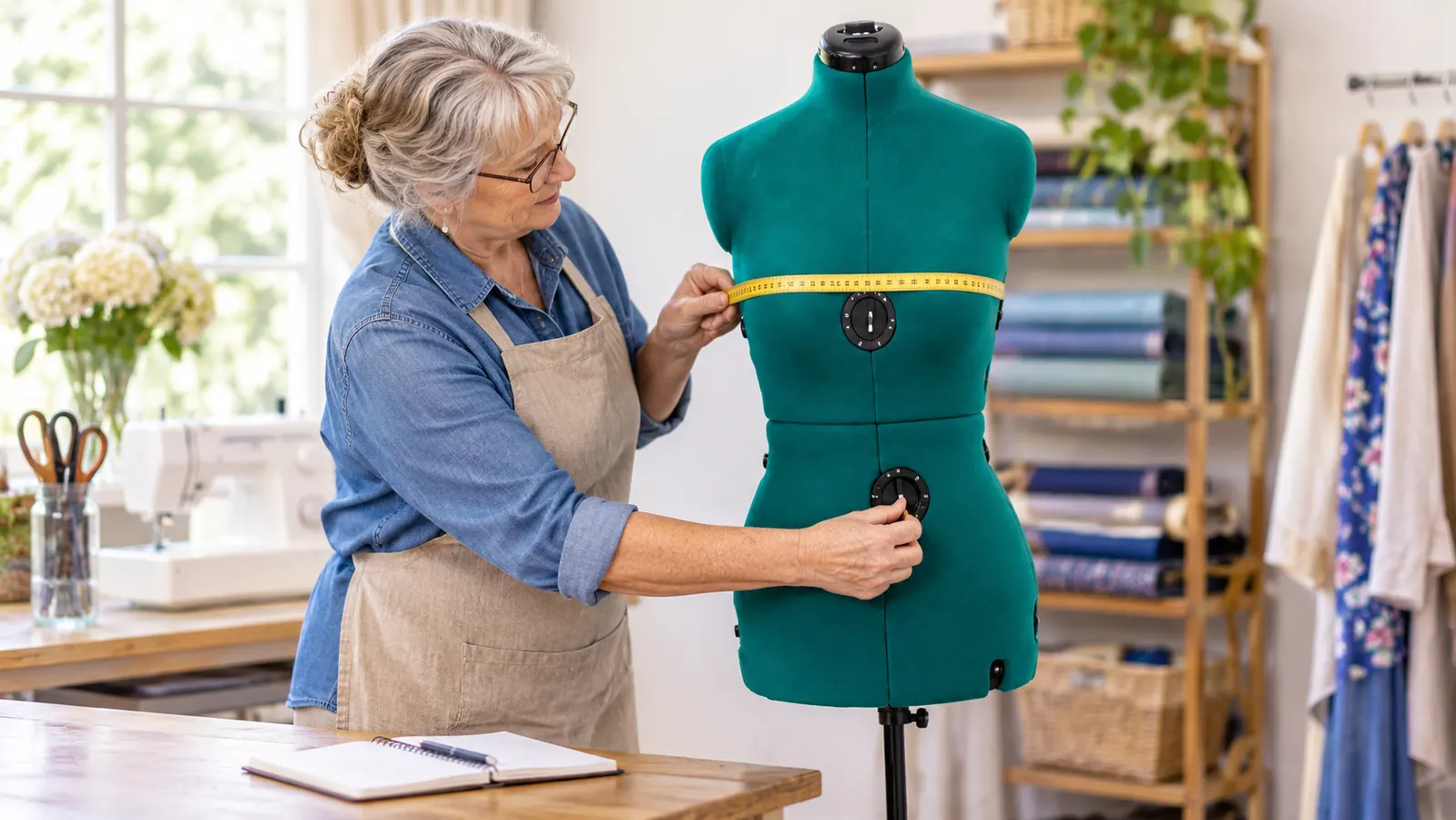
In any given week I might be sewing for myself at sixty-one, for my grown daughter, and for a teenage granddaughter who has grown three inches since spring. Three sets of measurements, one form. The bust opens to 46 inches and the waist to 40, and the rest of the twelve points follow along with them. I do not keep three mannequins in a spare bedroom. I keep one Dritz form, a notebook and a soft tape.
Nine wheels at the sides and back let you move one area at a time
Nine smooth-rolling adjustment wheels sit around the sides and back of the form. What that means at the table is that you can leave the bust where it is and move only the waist, or leave the waist alone and open the ribcage a half inch. Fitting a real body is a series of small negotiations. A form that only makes big moves forces you to start from scratch every time you change your mind.
The two front auto-set dials are where you actually work
The two front auto-set dials are the ones I read a hundred times per garment. They sit where I can see them while I am standing at the front of the form with a tape in my hand, which sounds like a small thing until you have spent a whole morning walking around a piece of equipment to check a number. Front access is not a luxury. It is the difference between setting the form once and setting it five times.
Full length means you can fit a dress, not just a blouse
Full length matters more than I expected when I bought it. A hip-length form is fine for tops and close to useless for the thing I sew most, which is a dress with a waist seam and a hemline. When the form runs the whole length of the body, you can see where the waist sits relative to the knee, and whether the skirt hangs the way the pattern drawing promised it would.
The height-adjustable pole puts your shoulder-to-floor measurement where it belongs
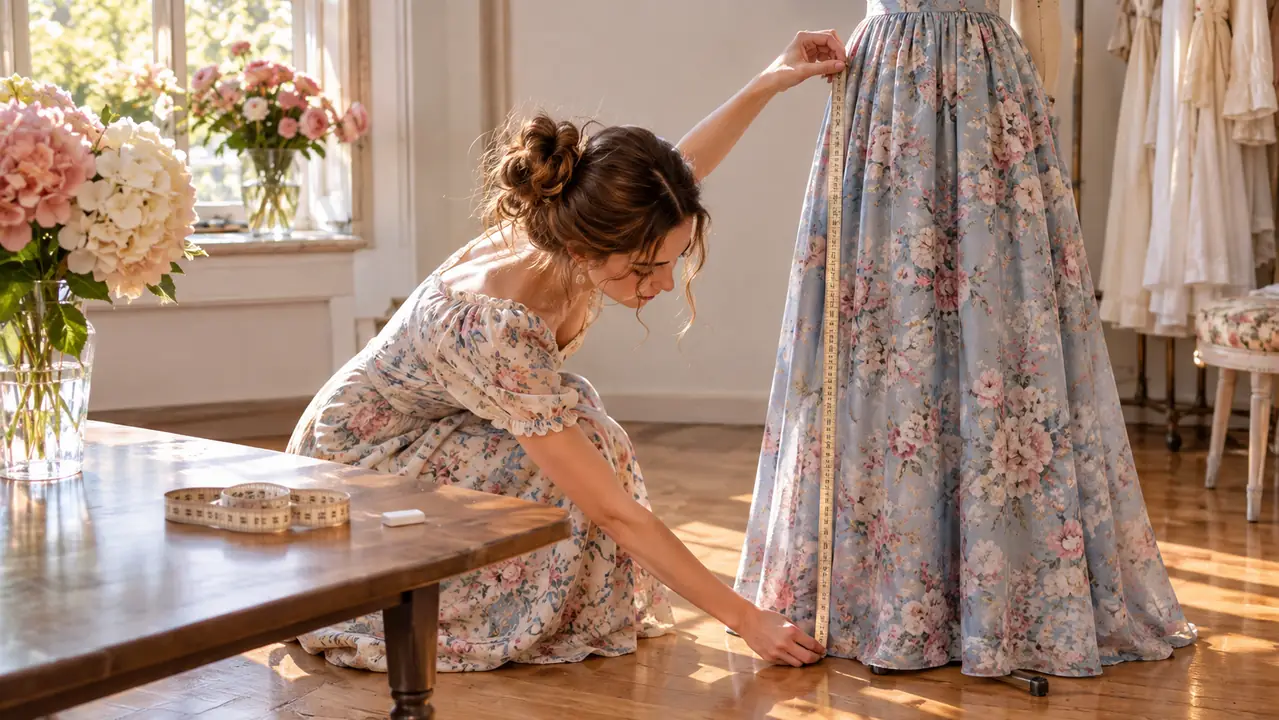
The center pole adjusts for height, so the form can match your own shoulder-to-floor measurement instead of a standard that was never yours to begin with. I am five foot four. My daughter is five foot eight. On a fixed mannequin one of us is always fitting on a body that is the wrong distance from the floor, and the hemline shows it every time. Set the pole once and the proportions stop being a guess.
The 360-degree hem adjustment helps you mark a line that is truly level
A hem marked on the cutting table is level to the table. That is not the same as level to the floor, and it is certainly not level to a body that stands with one hip higher than the other, which is most of us. The hem feature rotates a full 360 degrees so you can work your way around the form and mark against the floor. The floor is the only reference that has never lied to me.
You can fit for people who are not in the room
My granddaughter is at school. My daughter works. Neither of them can stand still on a Tuesday afternoon while I check a shoulder seam for the fourth time, and I would not ask them to. With the form set to their measurements, I do the tedious work alone and save the two minutes of standing still for the part that genuinely needs a person: the last look in the mirror.
Drag lines show up before you cut, not after
Show me a muslin on a hanger and I will tell you it looks fine. Show me the same muslin on a form and I will point out the three places it is pulling. That is the entire value, plainly stated: a garment on a body, in three dimensions, at the stage where changing it costs you a seam instead of a whole length of fabric you cannot buy again.
At 10.1 pounds you can carry it to the light
Ten point one pounds is light enough that I move the form to the window in the morning and back to the corner at night. Light enough that it does not quietly become furniture. The metal and plastic build has held up to being dragged around a spare bedroom for years. The best tool is the one you actually use, and a heavy one gets used on special occasions only.
What I'd Skip
Three things I would skip. I would skip trying to dial the form in perfectly in one sitting. Set the bust and waist to your numbers, sew one garment, then adjust the other points as you learn what your own posture does to a pattern. I would skip treating it as a substitute for a real fitting on knits and anything with much stretch, because a form does not breathe, sit or slouch. And I would skip buying one at all if you sew mostly loose tunics and elastic waists, where the gap between a good fit and a great one is a half inch nobody will ever see. An adjustable form earns its footprint when you sew fitted things: dresses with waist seams, jackets, anything with a sleeve that has to sit in a particular place.
Twelve adjustment points and nine wheels add up to one plain moment: you see the side seam swing forward while it is still a basting stitch.
Pick the body you are sewing for this week, then cut with a clear head
The Dritz Sew You adjusts across twelve points, runs full length, and weighs 10.1 pounds, so it moves to the light instead of living in a corner. Set it to your measurements and start sewing for the body in front of you.
Amazon Check today's price on Amazon →