
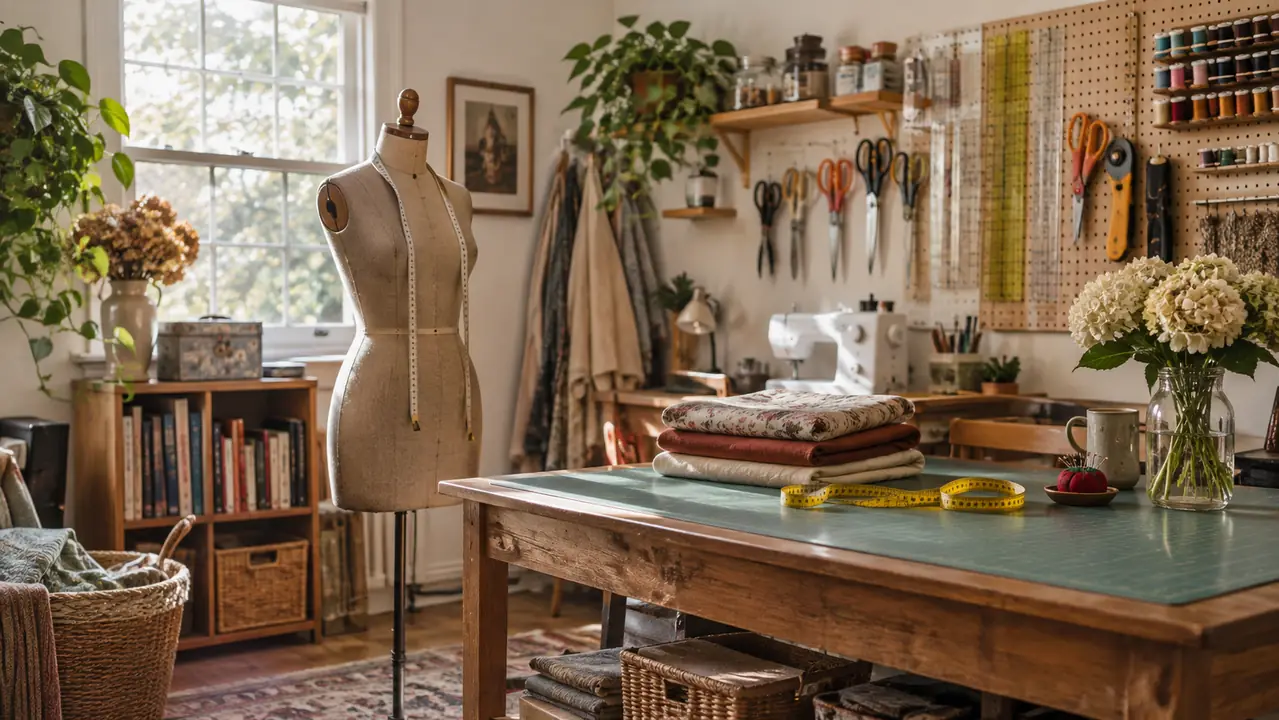
I own four dresses that have never left the house. Not because the fabric disappointed me and not because the bodice fought back, but because the hem was crooked, and a crooked hem is the one thing you cannot argue with in a mirror. You turn. You look. You tell yourself it is the lighting. It is never the lighting.
For years my method was this. Put the dress on. Stand on a chair. Ask my daughter to crouch at my feet with a tape measure and a mouthful of pins. She is patient, but she has her own life, and the line we produced still had a wave in it that I could see from across the room. I tried chalk marks on the wall. I tried laying the dress flat on the ironing board and telling myself it was fine. Neither of those gives you a body to work against. They give you guesswork with better posture.
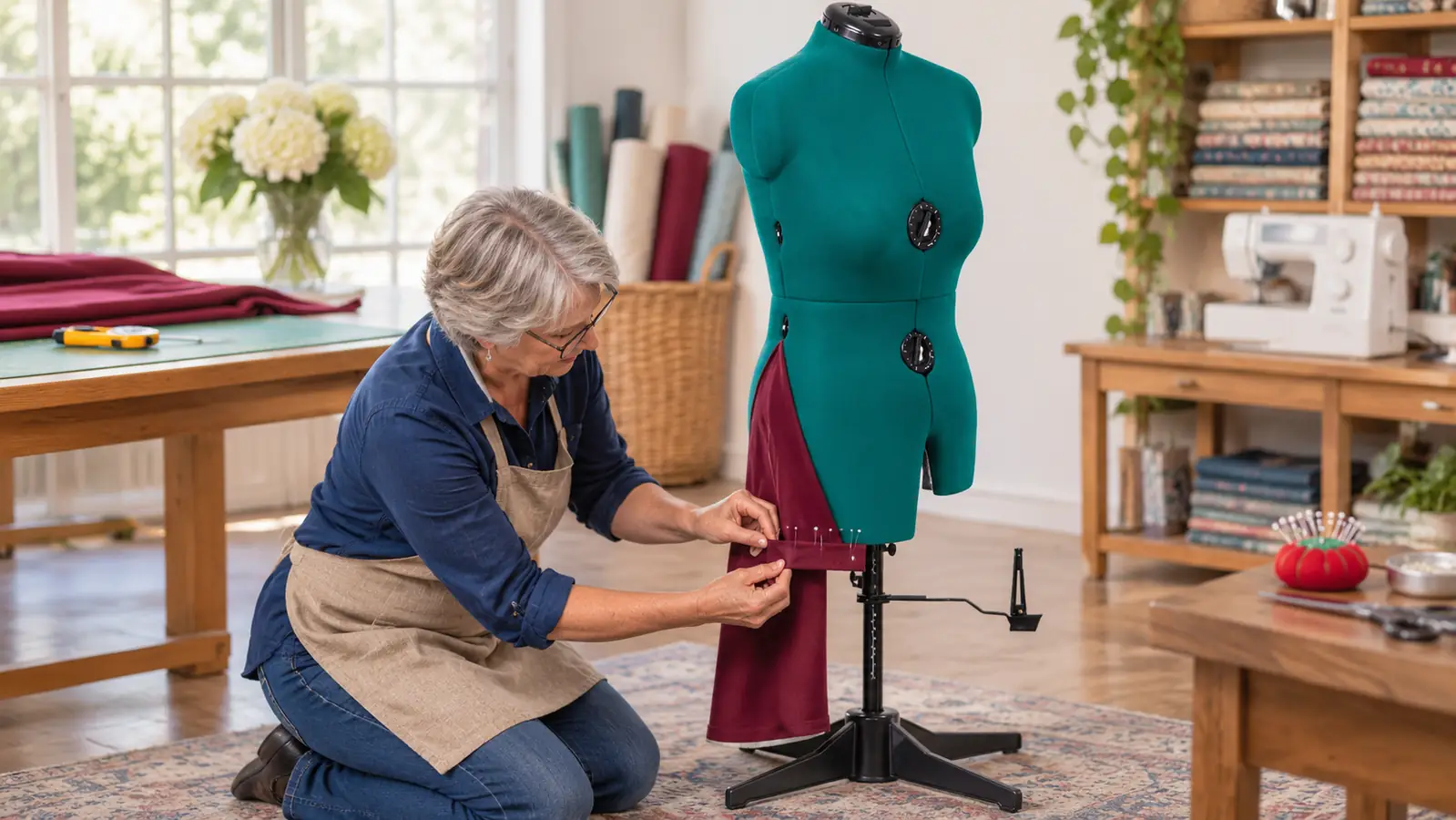
The Dritz Sew You is what I finally bought. What I needed was a copy of myself, standing still, at the right height, and not complaining about her knees. That is all an adjustable dress form is, and it took me an embarrassing number of years to get one. This model is the Medium/Large, which the listing gives as US 12 to 18.
Setting it up took one afternoon and a tape measure. The Dritz has twelve adjustment points: nine wheels down the sides and back, two auto-set dials at the front, and a center pole you raise or lower to match your shoulder-to-floor measurement. That last part matters more than most people expect. A form set two inches low gives you a hem that is two inches wrong, and you will not find out until you are standing in a room where you cannot change it.
The 360 degree hem guide is the piece I did not know I wanted. It rides around the form at a fixed distance from the floor, so you set the height once, then pin your hem against that line all the way around. No chair. No daughter. No wave.
The form did not make me a better seamstress. It removed a guess I had been making for thirty years without noticing I was making it.
A hem you can measure instead of hope for
The Dritz Sew You sets to twelve points and a shoulder-to-floor height, so the form matches your measurements instead of the other way around.
Amazon Check Today's Price on Amazon →What it changed first was my patience. Half a bodice on the form shows drag lines a mirror will not. A waist seam that sits level on the form sits level on me, because the form was built from my numbers in the first place. I take something in, walk it back to the machine, then put it on the form again. Two or three rounds of that, and a muslin that used to eat a whole weekend is done before lunch.
The two front dials are the ones I touch most. They hold their setting, so I can move between my measurements and my daughter's, note where I left things, and come back to mine without re-measuring from scratch. When you sew for three different bodies in one month, that is the difference between starting a project and finding a reason to avoid it.
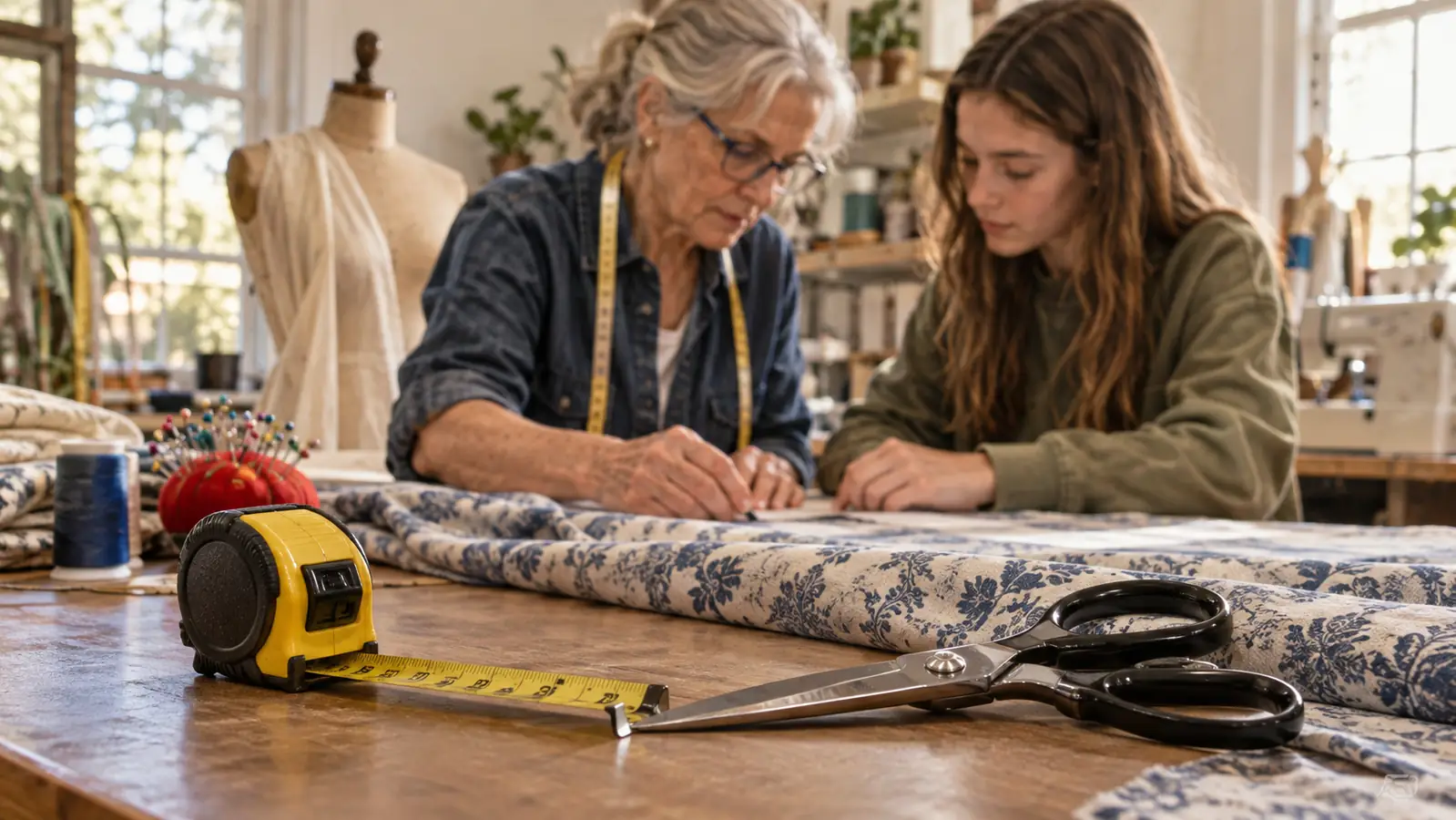
What the form does not do is move. It stands there. It does not breathe out, sit down, or drop one shoulder forward the way a real body does, so anything with a deep armhole or a narrow skirt still needs a last fitting on a person. I use the form for the long straight work, the hems and the waistlines, and I keep the final check for myself.
It also has a range, and you should check yours honestly before you buy. The Medium/Large is listed at a 46 inch chest and a 40 inch waist. My granddaughter is a good deal smaller than that, and my daughter is broader through the back. The twelve points move enough that the three of us share one form, but if you sit outside the size range, this is not the model to start with, and no amount of adjusting will make it so.
A note on the physical thing itself. It is 10.1 pounds of metal and plastic, so it stands where you put it and it can be shifted when you want the floor back. Mine lives against the wall between projects and comes out when a hem is on the table. That sounds like a small thing until you have owned something heavy you cannot move.
I would also tell you to set it up with someone else reading the tape. My first attempt was off by an inch and a half at the shoulder because I measured myself with my chin tucked down. The Dritz is only as accurate as the numbers you feed it.
I hem everything on it now. Dresses, my granddaughter's school skirt, a pair of wide trousers I shortened three times because I kept changing my mind about the break. Each time I set the hem guide, pinned, and finished. Those trousers took twenty minutes a go instead of an evening, and I stopped dreading them.
What I'd Tell You If We Were Sitting at My Kitchen Table
I would say this. Buy it because you want a body to work against, not because a form looks professional standing in the corner of a sewing room. If your finished clothes fit but hang a little wrong at the hem, if you have ever pinned a skirt while balancing on a chair and quietly hoped, this is the purchase that ends the hoping. Measure carefully, set the pole to your own shoulder-to-floor length, and check the size range before you order. Everything after that is just pinning to a line that stays where you put it.
Stop hemming from a chair
Set the form once to your own numbers, then pin against a line that does not move.
Amazon See the Dritz Sew You on Amazon →