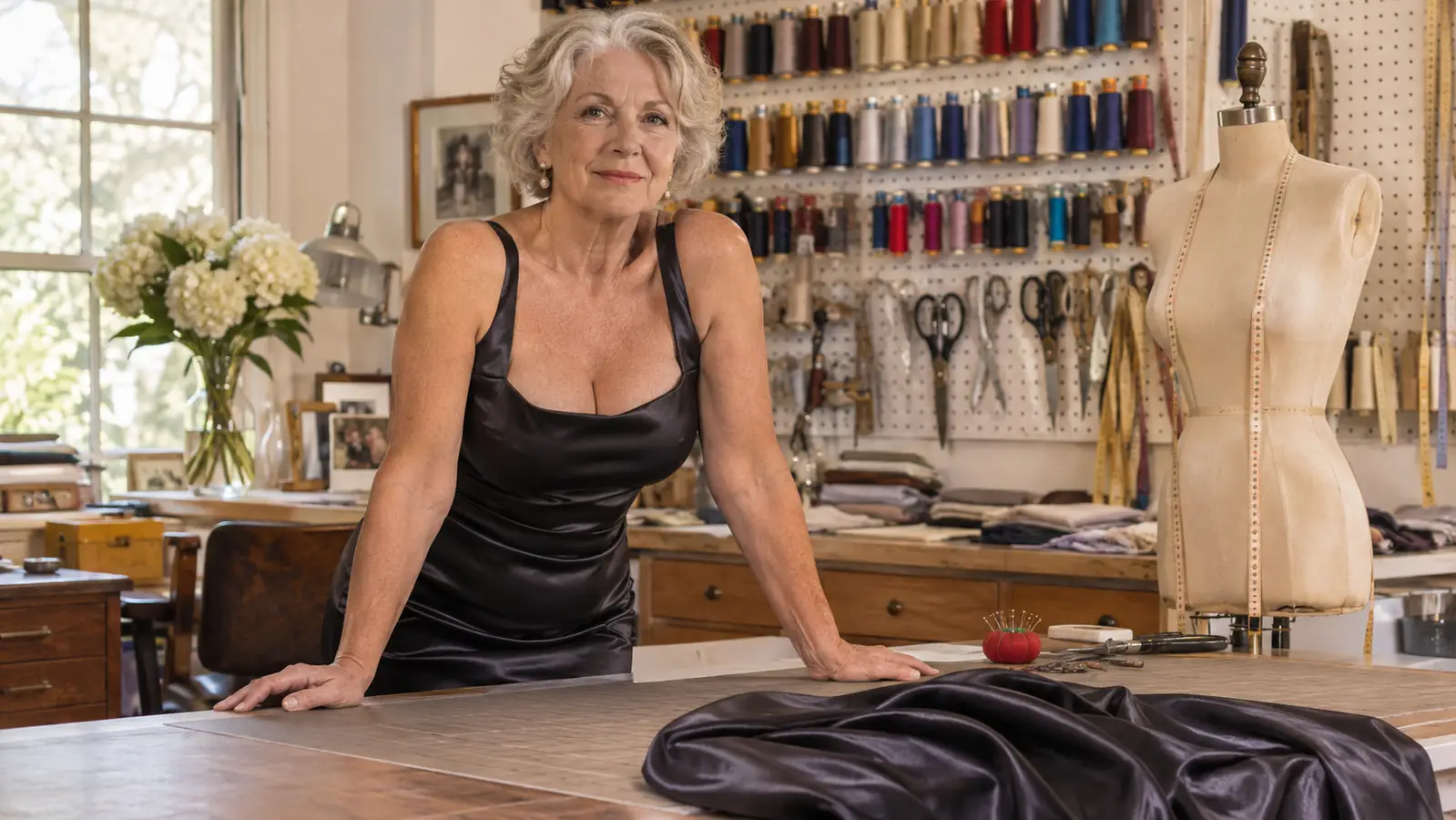
My granddaughter turned sixteen in March and asked me to make her a dress for a spring dance. My daughter wanted a linen top for a work trip the same month. I was halfway through a wool skirt for myself that had already been unpicked twice at the hip because the fit was wrong and I could not see why. Three people, three very different shapes, one long cutting table, about six weeks to get all of it done. That is the month I bought the Dritz Sew You adjustable dress form, and it is the month I stopped pinning hems on myself in front of a mirror and swearing.
Before that I did it the way most home sewers do it. I measured myself, wrote the numbers on the back of an envelope, and then guessed at everything a tape measure cannot tell you, like where your shoulder actually sits and how much room your back needs when you reach forward. When my daughter was in town I would have her stand on a stool while I pinned. When she was not, I would put a half-finished garment on inside out, twist in front of the mirror until my back ached, and stick myself with a pin. The Dritz form did not make me a better pattern drafter. What it did was shrink the guessing down to a size I could manage.
The Quick Verdict
A genuinely useful adjustable form for a household that sews for more than one body. It sets fast, holds its setting while you pin, and the height pole fixes the hem problem that a fixed mannequin cannot. It is not pinnable the way a professional form is, it does not fold away, and it will never replace a fitting on the person.
Amazon Check Today's Price →Set the pole to your own shoulder-to-floor number and the hem stops being a guess
The Dritz Sew You adjusts across US 12 to 18, holds a setting while you work, and resets for the next person in about four minutes. If more than one body uses your cutting table, that reset speed is the whole argument.
Amazon Check Today's Price on Amazon →How I've Used It
It arrived flat and I put it together on the kitchen table in about twenty minutes with a screwdriver and a sheet of instructions that was mostly pictures. The part worth slowing down for is the center pole. It slides so you can set the form to your own shoulder-to-floor measurement, and that single number does more for a hem than anything else on the thing. I am five foot four. My daughter is five foot eight. On my old setup, a skirt that hung correctly on me was four inches short on her, and I would discover it after the hem was already stitched. Now I set the pole first, before anything else, and the length is right before I pick up the shears.
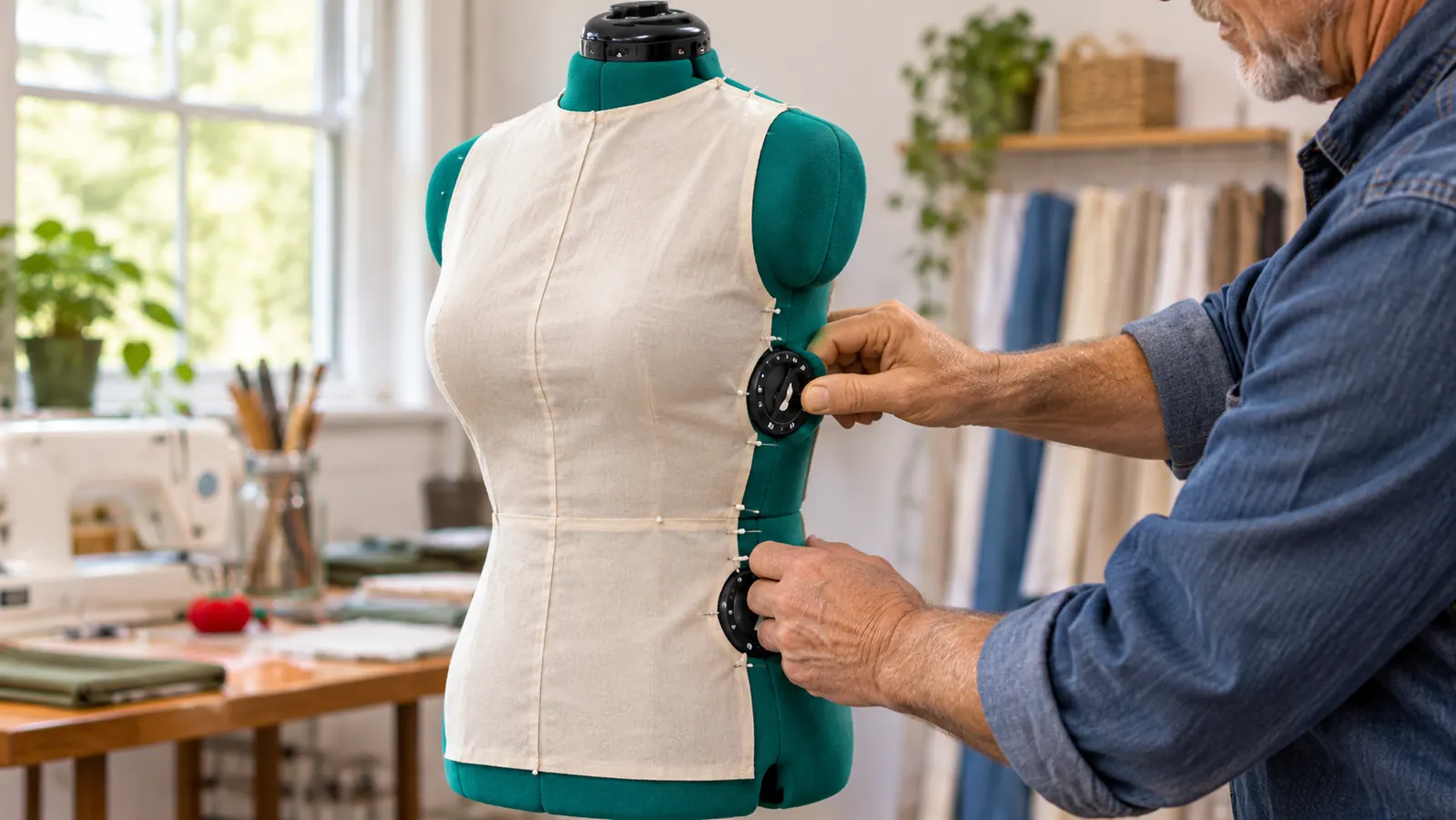
Setting it for a person takes about ten minutes the first time and four minutes after that. There are twelve adjustment points in all, nine of them smooth-rolling wheels at the sides and back, plus two auto-set dials at the front with clear markings. The dials read out in dress sizes, which is a convenience I did not expect to like as much as I do. I still work from the tape measure rather than the size number, because a woman can be one size at the bust and another at the waist and the size number will lie to you, but the dials give me a starting place instead of starting from nothing.
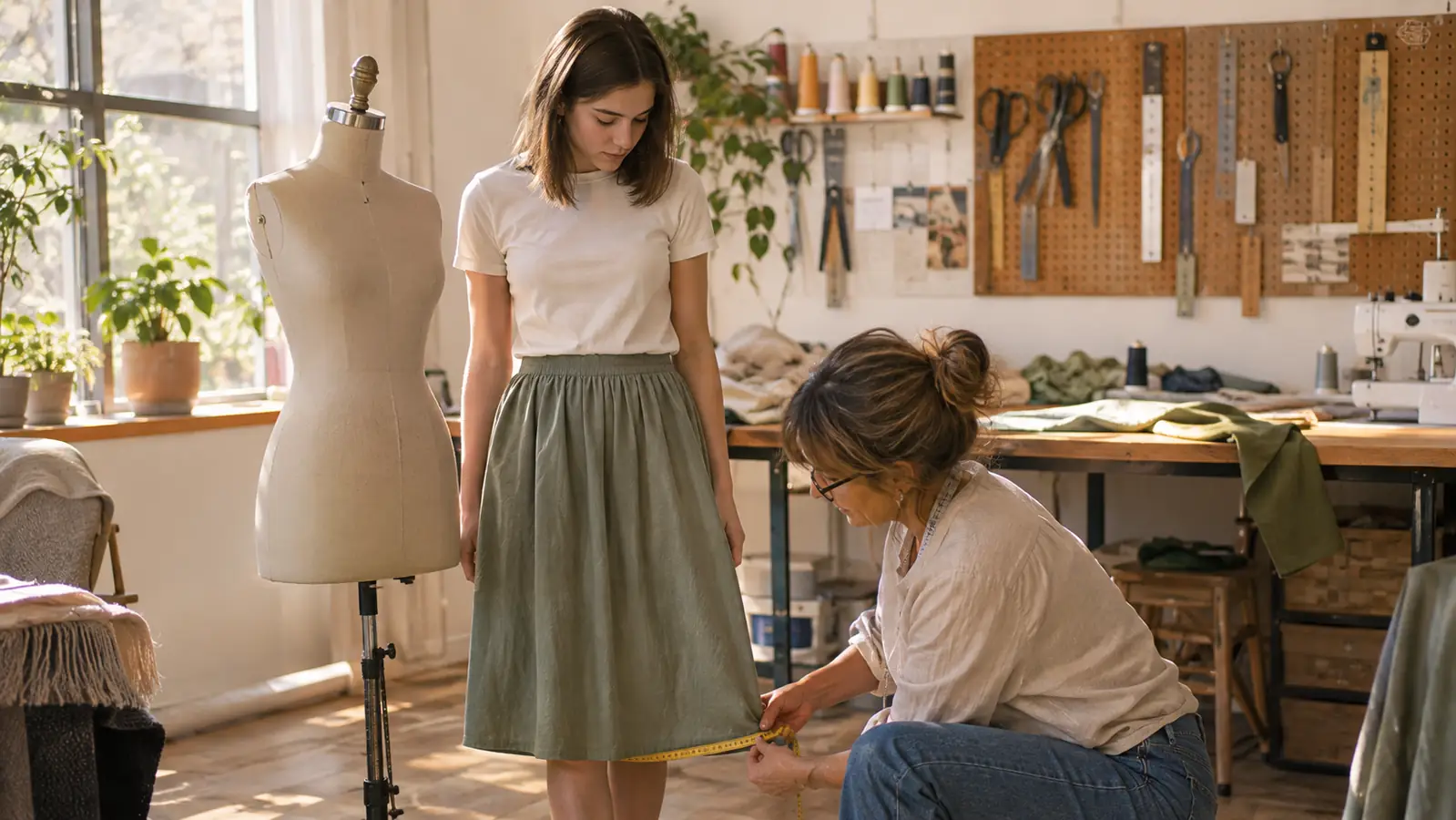
The hem is what I use most. It adjusts all the way around, so I can mark a skirt at a consistent distance from the floor without crawling in a circle with a yardstick and without asking anybody to stand still for ten minutes. I marked a wool skirt in eleven minutes last month. That same skirt took me an entire evening two years ago and still came out uneven at the back, which I only noticed when I wore it out.
One thing I will say plainly, because I had to learn it: the form is a drafting tool, not a verdict. The first time I set it up I expected it to tell me the answer. It does not. It shows you the problem. You still have to decide what to do about the problem, and that is the part where experience counts and where a form just makes the problem visible sooner and cheaper.
What the Adjustments Actually Do
The form adjusts at the bust, the waist and the hips, which are the three places a home pattern usually goes wrong. What matters to me is the relationship between them rather than any single number. A pattern drafted for a smaller cup on a body that needs more room will pull at the front closure no matter how carefully you sew it, and once you can walk around the shape in three dimensions you can see where the room needs to go before you cut the good fabric.
The first project I put on it was a toile for my granddaughter's dress. She is a different shape from me entirely, narrow through the shoulders and fuller through the seat, and for years I had been cutting her a size too big at the top just to get the hip to fit, then taking in the shoulders and hoping. On the form I could see the extra fabric pooling in a soft fold at her lower back. I pinched out a wedge at the back bodice, transferred it to the paper, and the second toile fit. That is the entire argument for owning one of these. Not that it fits for you, but that it shows you where the fit is wrong in a way a mirror never will.
The height adjustment is what separates a form from a shop window mannequin. A display mannequin is a fixed shape at a fixed height, and unless your body happens to be that shape, you are fitting a stranger. The Dritz slides to your own shoulder-to-floor length and then holds there while you work, so a jacket hem sits where a jacket hem sits on you and not two inches higher.
The materials are metal and plastic and it weighs a little over ten pounds, which in practice means I can move it from the cutting table to the corner of the room on my own without asking anybody, and it stays where I put it while I am leaning on it with pins in my mouth. For a woman my age with a bad shoulder, that balance of light enough to shift and steady enough to trust is worth more than any feature on the box.
One Form, Three Bodies
The week I needed it most was the week all three of us had something in progress. I set the form for my granddaughter on a Monday and marked her dress. On Tuesday I reset it for my daughter, who is fuller through the bust and shorter through the back waist than I am, and the form takes her at forty-six inches through the chest without complaint. On Wednesday I set it back for myself. The reset is four minutes, and I keep an index card for each of us with the numbers written down, so nobody has to be measured twice.
That is what I tell people who ask whether one form can serve a whole household. Yes, as long as everybody is inside its range. This one is built for US 12 to 18, adjusting to a forty-six inch chest and a forty inch waist, and it is full length so skirts and dresses work as well as tops. My daughter sits close to the top of that range and it holds her comfortably. My granddaughter is at the small end, where a half inch shows, so I set the form as far in as it goes and check the tape against her card rather than trusting the dial marking.
The thing to accept is that a form is not a person. It does not slouch. It does not carry weight the way a body does. My daughter stands with one shoulder lower than the other after years of carrying a work bag on the same side, and the form has no opinion about that. So I still fit her in person for anything structured, a jacket or a bodice with a set-in sleeve. I use the form for the drape, the hem, the length, and the long list of small adjustments that do not require a second person standing still in the middle of the room on a Sunday afternoon.
Where It Falls Short
It is a little over ten pounds and it does not fold down into anything. Mine lives in the corner of the sewing room beside the pegboard, and when I want the floor back I carry it into the closet and shut the door. That works for me because I have a room for this. It would not work in an apartment where the dining table does double duty and every square foot is spoken for.
The adjustment panels are separated by seams where the sections slide past one another, so there are lines across the form you can feel with a fingertip. When I drape, I pin into the fabric itself and not into the form, because those seams swallow a pin and stop it short. If you are used to a professional form with a padded surface you can drive a pin into, this one will feel harder and less forgiving under your hand, and there is no way around it at this build.
And there is a limit to how much any form can imitate a body. It handles proportion, which is most of the battle. It does not handle soft tissue, and it cannot tell you how a garment will behave when the person inside it sits down, reaches for a shelf, or eats a large dinner. For that you need the person. Nobody should buy this and believe they have replaced the fitting, because the garment that fits a form perfectly and the garment that fits a woman comfortably are not always the same garment.
What I Liked
- Sets in about four minutes once you know the numbers, so three people can share one form in a week
- The height-adjustable center pole fixes hem length before you cut, which no fixed mannequin can do
- The hem line adjusts all the way around, so marking a skirt is a ten minute job instead of an evening
- Twelve adjustment points with nine side and back wheels plus two front auto-set dials give a readable starting point
- Covers US 12 to 18, adjusting to a forty-six inch chest and a forty inch waist, full length for skirts and dresses
- A little over ten pounds, so one person can move it alone and it stays put while you pin
Where It Falls Short
- The panel seams stop a pin, so draping means pinning into the fabric rather than the form
- Does not fold or collapse, and it needs a corner to live in
- No posture, no asymmetry and no soft tissue, so structured garments still need a real fitting
- Outside US 12 to 18 you are outside its range, and no amount of adjusting fixes that
It does not fit for you. It shows you where the fit is wrong, and that is the part I could never get from a mirror.
Who This Is For
This is for the home sewer who makes clothes for more than one body, or for one body that changes. If you sew for a daughter who lives two hours away and visits twice a year, this lets you do the fitting work on the days she is not standing in front of you. If you are like me and you sew for three generations, it saves you from resetting a paper pattern three times and hoping. It is also for the woman who has been pinning hems on herself in a mirror and getting it wrong, because the height pole alone will change your results.
It suits someone who drafts or alters and wants to see the shape. If you follow a pattern exactly as printed and it usually fits, you may not need this at all. The Dritz earns its corner of the room when the pattern does not fit and you need to know why, which is a different job than simple construction.
Who Should Skip It
Skip it if you are outside US 12 to 18. A form is only useful when it can be set to you, and no adjustment wheel on this one will take a body well beyond a forty inch waist. Skip it if you need to pin deep into a padded surface for serious draping, because the seams between the panels will fight you every time. Skip it if you have nowhere to keep a ten pound object standing upright, because it does not fold, and a form that lives in a closet and never comes out is just a shelf. And skip it if you are looking for something that replaces a fitting with the actual person. Nothing does that, and this one does not pretend to.
Three bodies, one cutting table, and a hem that finally hangs where it should
The Dritz Sew You sets to a forty-six inch chest and a forty inch waist, marks a hem all the way around, and resets for the next person in four minutes. Check the current price and the size range against your own measurements before you order.
Amazon Check Today's Price on Amazon →